
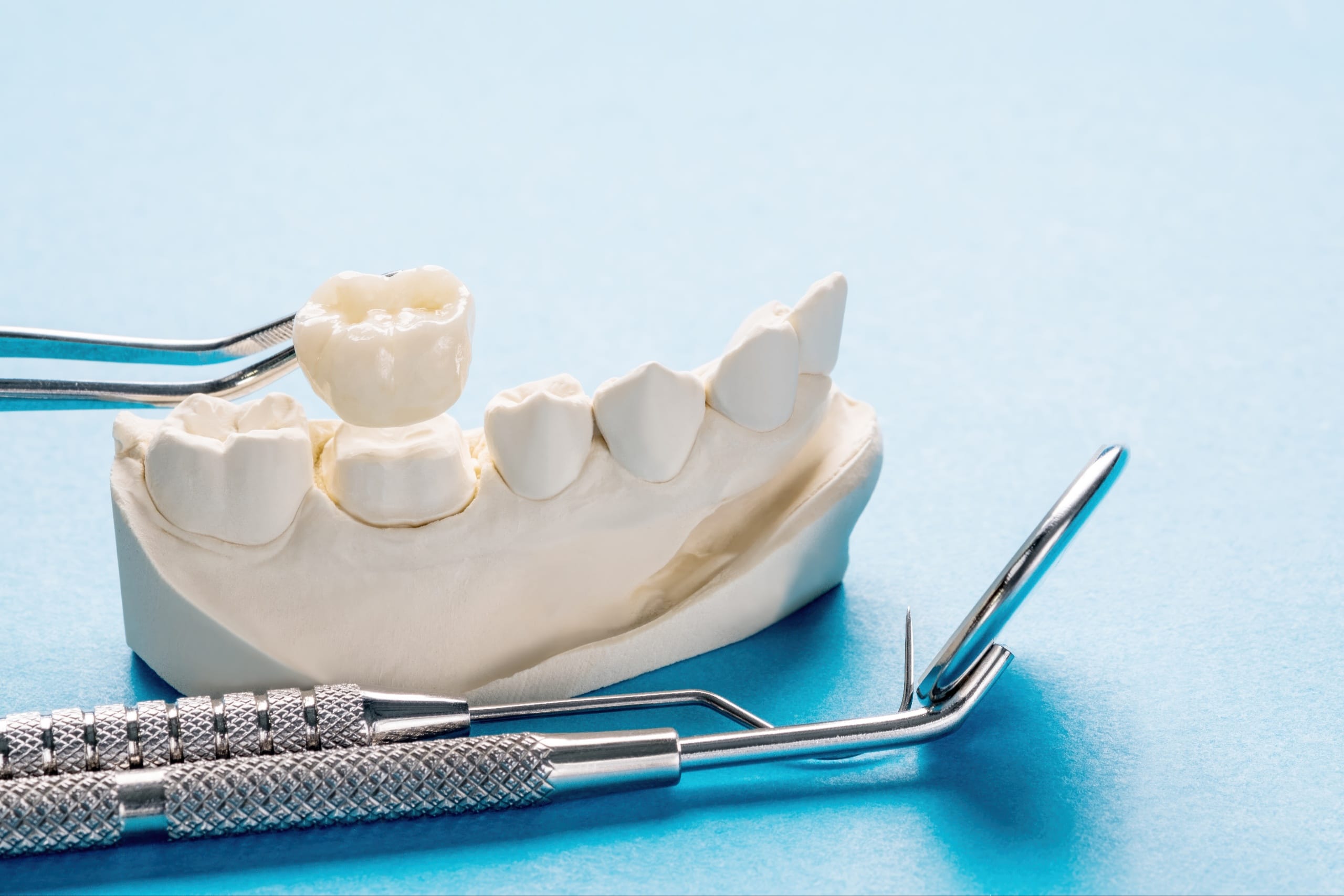
A damaged or weakened tooth does not always need to be removed. At Paramount Dental in Placerville, a custom dental crown can cover and reinforce a tooth affected by significant decay, cracks, wear, large fillings, or previous dental treatment while restoring comfortable function and a natural-looking appearance.
Benefits of a Dental Crown
Dental crowns are designed to preserve and reinforce teeth that have lost enough healthy structure that a smaller restoration may no longer provide dependable support. Here are some of the benefits:
- Help preserve a natural tooth: Covering and reinforcing a damaged tooth may allow it to remain functional instead of requiring extraction.
- Restore comfortable chewing: Rebuilding lost tooth structure can improve the way a damaged or worn tooth functions during meals.
- Reduce the risk of further fracture: A crown surrounds weakened tooth structure and helps protect it from forces that could cause additional damage.
- Rebuild worn tooth structure: Teeth affected by significant wear can be restored to a more functional size and shape.
- Improve the appearance of a damaged tooth: Tooth-colored crown materials can be selected to coordinate with surrounding teeth when appearance is important.
- Complete other restorative treatments: Crowns may be used to restore dental implants, support certain dental bridges, or protect selected teeth following root canal treatment.
- Provide a durable restorative solution: With appropriate care, a crown can provide years of service while protecting the tooth beneath it.
Dental Crown Procedure and Process
Dental crown treatment begins with:
- Examination and treatment planning: Your dentist evaluates the amount of healthy tooth structure remaining, checks for decay or cracks, and determines whether the tooth can be predictably restored.
- Preparing the tooth: Damaged or decayed areas are treated, and the tooth is carefully reshaped to create room for the crown. Additional restorative material may sometimes be needed to create an adequate foundation.
- Creating a record of the prepared tooth: An impression or digital scan may be used to capture the shape of your tooth and bite so a custom restoration can be fabricated.
- Temporary protection: When the final crown is being made by a dental laboratory, a temporary crown may be placed to protect the prepared tooth between appointments.
- Checking the final crown: Before placement, your dentist evaluates the crown’s fit, contacts with neighboring teeth, bite, and appearance.
- Securing the restoration: Once the crown meets the clinical requirements, it is cemented or bonded into place.
- Follow-up when needed: Your dentist may recheck your bite and comfort after placement, especially if the restoration feels different once you resume normal chewing.
Many traditional laboratory-made crowns require two appointments, although the exact number of visits depends on the condition of the tooth, restorative material, fabrication process, and whether other dental treatment must be completed first.
Candidacy & Alternatives
A dental crown may be recommended when a tooth is damaged but still has enough healthy, stable structure to be restored. A crown may be considered when:
- A large filling has weakened the remaining tooth structure.
- A tooth is cracked, fractured, or significantly worn.
- Decay is too extensive for a standard filling alone.
- A tooth needs additional protection after certain root canal treatments.
- A dental implant needs its final visible tooth restoration.
- A tooth requires a major change in shape or structure for restorative reasons.
Alternatives to a Dental Crown
Your dentist will generally recommend the most conservative treatment that can predictably restore the tooth. Depending on the amount of damage, alternatives may include:
- Dental filling: Smaller areas of decay or damage may be restored without covering the entire tooth.
- Inlay or onlay: These partial restorations may be appropriate when a tooth requires more support than a filling but does not need complete crown coverage.
- Porcelain veneer: A veneer may be considered for selected cosmetic concerns when the tooth does not require the structural protection of a full crown.
- Root canal treatment: If infection or inflammation affects the dental pulp, root canal therapy may be necessary before the tooth receives its final restoration.
- Extraction and tooth replacement: If a tooth cannot be restored predictably, your dentist may discuss removal followed by a dental implant or dental bridge.
Cost & Insurance
The cost of a dental crown depends on your individual treatment plan. Factors taken into consideration include:
- The tooth being restored
- The crown material
- The amount of preparation required
- Laboratory or fabrication costs
- Diagnostic imaging necessary
- Whether decay treatment, a buildup, root canal therapy, or another procedure is needed first
Many dental insurance plans provide benefits for crowns when treatment meets the plan’s restorative criteria. Paramount Dental can help review your specific estimated insurance benefits and expected out-of-pocket costs before treatment. We also offer financing and payment options to patients that qualify. Read more about this on our insurance and financing page.
Aftercare & Maintenance
A crown cannot develop a cavity itself, but the natural tooth underneath it can still develop decay where the crown meets the tooth. Healthy gums are also important for maintaining the restoration, making the following essential:
- Brush twice daily with fluoride toothpaste and a soft-bristled toothbrush.
- Floss around the crown every day, paying close attention to the gumline.
- Continue professional dental exams and cleanings at the interval recommended for you.
- Avoid chewing ice, hard candy, pens, or other objects that can chip or fracture restorations.
- Tell your dentist if you clench or grind your teeth so a protective nightguard can be considered when appropriate.
- Contact your dental team if the crown feels loose or your bite suddenly feels different.
Some temporary sensitivity can occur after a tooth is prepared or after a crown is placed. Persistent pain, increasing sensitivity, swelling, or discomfort when biting should be evaluated rather than ignored. Contact Paramount Dental at (530) 295-8000 if your crown becomes loose, breaks, chips, causes ongoing discomfort, or develops another noticeable change.
Dental Crown FAQs
Can a cavity form under a dental crown?
Yes. A crown itself cannot decay, but the natural tooth underneath remains susceptible to cavities, particularly around the crown margin. Daily brushing, flossing, and regular professional care help protect the supporting tooth.
Why does my crowned tooth hurt when I bite down?
Discomfort during biting can have several causes, including a bite that needs adjustment, irritation inside the tooth, a crack, or another dental concern. If discomfort persists after crown placement, contact Paramount Dental so the tooth and bite can be evaluated.
What should I do if my temporary crown comes off?
Contact the dental office for instructions and avoid chewing directly on the prepared tooth. Do not use household glue to reattach the crown. The tooth may be more sensitive or vulnerable while the temporary restoration is missing.
Can I eat normally with a permanent dental crown?
Once your dentist confirms that the final crown is secure, you can generally return to normal chewing. Avoid using crowned or natural teeth to bite extremely hard objects such as ice because crowns can still chip, crack, or become damaged.
Can teeth whitening change the color of a dental crown?
No. Whitening products can lighten natural tooth structure but do not change the shade of porcelain, ceramic, zirconia, or other crown materials. If you plan to whiten your teeth and receive a visible crown, ask your dentist about the best order for treatment.
Can a dental crown be repaired if it chips?
Minor damage may sometimes be repairable, depending on the crown material, location of the chip, bite forces, and condition of the underlying tooth. Larger fractures or a compromised fit may require replacement. Our Placerville dentist must examine the restoration to determine the appropriate option.
Can gum recession expose the edge of my crown?
Yes. If gum tissue recedes over time, part of the tooth or crown margin may become more visible. An examination can help determine whether the recession is related to gum disease, brushing habits, tooth position, or another factor and whether treatment is needed.
Does a crowned tooth still have a nerve?
Usually, yes. Preparing a tooth for a crown does not automatically remove the dental pulp or nerve. Root canal treatment is only needed when the pulp becomes infected, severely inflamed, or otherwise requires treatment based on your dentist’s diagnosis.