
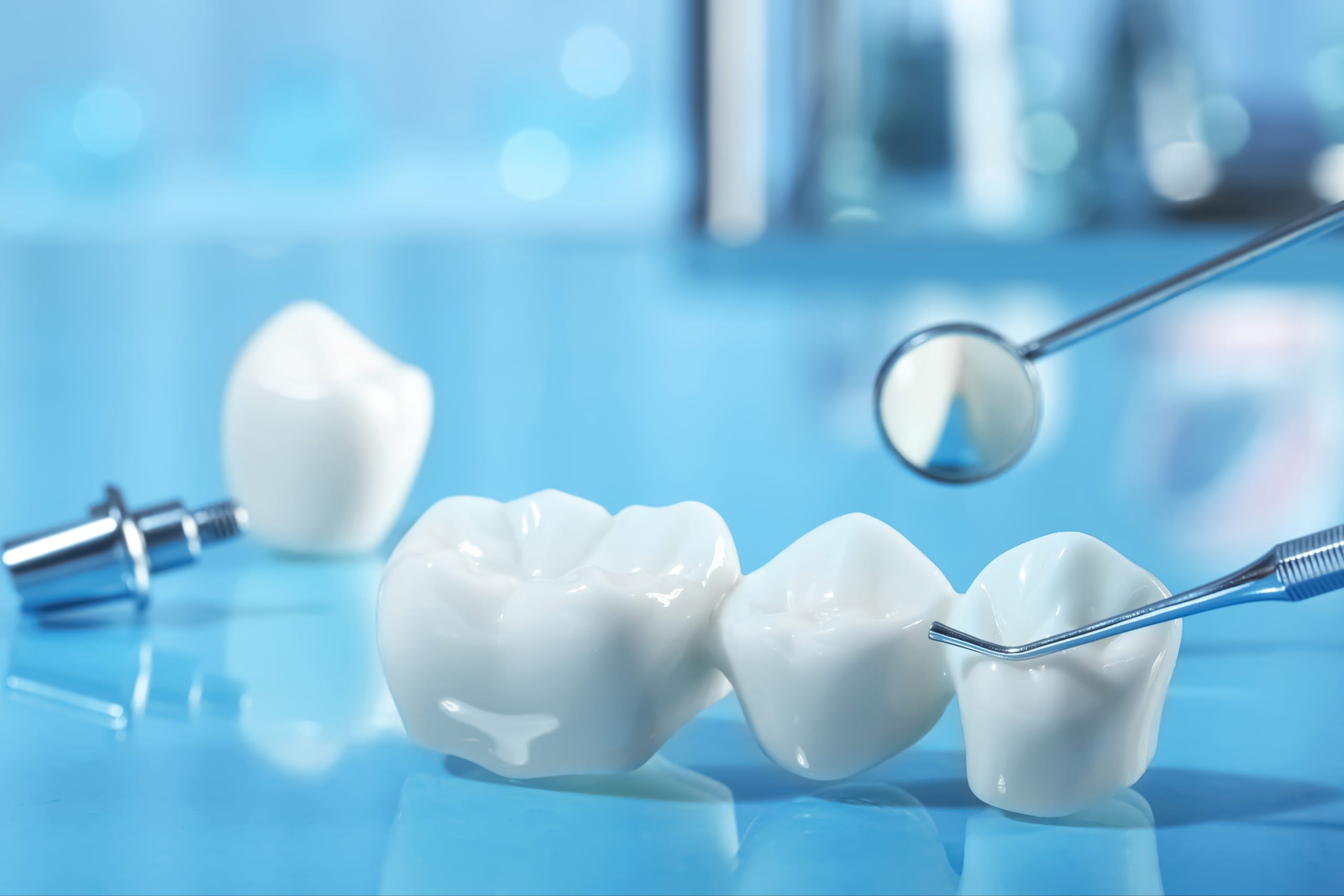
Missing teeth can affect how comfortably you chew, speak, and smile. At Paramount Dental in Placerville, a custom dental bridge can replace one or more adjacent missing teeth with a fixed restoration designed to restore function and create a natural-looking result.
Benefits of a Dental Bridge
A dental bridge provides a fixed solution for replacing missing teeth and, when properly placed, provides many benefits.
- Restore a complete-looking smile: Custom replacement teeth fill visible gaps and are designed to coordinate with surrounding natural teeth.
- Improve chewing efficiency: Restoring missing teeth gives you additional surfaces for breaking down food and may make eating more comfortable.
- Help maintain tooth alignment: Filling an open space can reduce the tendency of neighboring teeth to gradually drift toward the gap.
- Support clearer speech: Replacing missing teeth may improve pronunciation when tooth loss has affected how certain sounds are formed.
- Provide a fixed replacement: A fixed bridge stays secured in your mouth instead of being removed each day like a conventional partial denture.
- Balance your bite: Replacing a missing section of your smile can help distribute chewing forces across more teeth.
- Offer multiple support options: Depending on your oral health, a bridge may be supported by natural teeth or dental implants.
Dental Bridge Procedure and Process
Following is what you can expect from the dental bridge process:
- Consultation and examination: Your dentist evaluates the number and location of missing teeth, supporting teeth, gum health, bite, and restorative goals.
- Treatment planning: Your dentist reviews whether a traditional bridge, implant-supported bridge, dental implant, removable partial denture, or another option best fits your needs.
- Preparing supporting teeth: For a traditional bridge, the teeth beside the gap are reshaped so crowns can fit over them and support the replacement tooth or teeth.
- Creating dental records: An impression or digital scan may be taken so your bridge can be fabricated for an individualized fit, bite, and appearance.
- Temporary protection: A temporary bridge may be placed while a dental laboratory creates the final restoration.
- Final placement: Your dentist checks the fit, appearance, contact points, and bite before securing the finished bridge.
- Follow-up: Your dental team may recheck your bite and comfort after placement to make sure the restoration is functioning as expected.
An implant-supported bridge follows a different process because dental implants must first be placed and allowed to integrate with the jawbone before the final bridge can be attached. Visit the dental implants page to learn more about implant-based tooth replacement.
Candidacy & Alternatives
A traditional dental bridge may be appropriate when:
- You have multiple teeth missing in one area of your mouth.
- The neighborning teeth are strong and in good condition.
- You have good gum health.
- Your bite and chewing forces are balanced.
- You have a good oral hygiene regimen.
Decay, gum disease, or problems affecting potential supporting teeth may need to be treated before a bridge is placed.
Alternatives to a Traditional Dental Bridge
- Single dental implant: A dental implant can replace a missing tooth without requiring crowns on adjacent healthy teeth.
- Implant-supported bridge: Dental implants can support a bridge when several neighboring teeth are missing and the patient is an appropriate implant candidate.
- Removable partial denture: A partial denture can replace several missing teeth and can be removed for cleaning.
- Other restorative planning: The condition and location of your remaining teeth may make another restorative approach more suitable.
Each option has different requirements, costs, maintenance needs, and treatment timelines. Your dentist can compare them with you before you choose how to replace your missing teeth.
Cost & Insurance
The cost of a dental bridge varies according to your individual treatment plan. Factors include:
- The number of teeth being replaced
- The bridge design
- The restorative material chosen
- The condition of the supporting teeth
- Necessary diagnostic imaging
- Whether additional dental care is required before placement
Dental insurance may contribute toward a bridge when restorative tooth replacement is included in your benefits. Coverage varies by plan and may be affected by deductibles, annual maximums, waiting periods, replacement-frequency rules, missing-tooth provisions, and your plan’s percentage of coverage. Our Placerville office team will review your benefits and provide you an estimate prior to the procedure.
For patients that qualify, financing and payment options may be available. Visit our insurance and financing page for more information.
Aftercare & Maintenance
Good daily hygiene is especially important around a dental bridge because plaque and food debris can accumulate beneath the replacement tooth and around the supporting crowns. Keeping these areas clean helps protect the gums and natural teeth that support the restoration.
- Brush twice daily with fluoride toothpaste and a soft-bristled toothbrush.
- Clean underneath the bridge every day with a floss threader, interdental brush, water flosser, or another tool recommended by your dental team.
- Pay special attention to the gumline around supporting crowns or implants.
- Continue professional dental exams and cleanings at the interval recommended for you.
- Avoid chewing ice, pens, hard candy, or other objects that could damage the restoration.
- Tell your dentist if you grind or clench your teeth so appropriate protection can be discussed.
A dental bridge can function for many years, but it is not a lifetime restoration. Longevity depends on the health of supporting teeth and gums, bridge material, bite forces, oral hygiene, and regular professional care.
Contact Paramount Dental at (530) 295-8000 if your bridge becomes loose, cracks or chips, causes persistent discomfort, or changes the way your teeth come together.
Dental Bridge FAQs
How do I clean underneath a dental bridge?
Because the replacement tooth is connected to the supporting crowns, ordinary floss cannot be pulled directly down between those sections. A floss threader, interdental brush, water flosser, or another recommended cleaning aid can help clean underneath the bridge and along the gumline.
Can a cavity develop underneath a dental bridge?
Yes. The artificial replacement tooth cannot develop decay, but the natural teeth supporting a traditional bridge still can. Plaque accumulation around the crown margins can increase cavity risk, which is why careful brushing, cleaning beneath the bridge, and regular dental visits are important.
What happens if a supporting tooth needs a root canal?
The appropriate treatment depends on the condition of the tooth and bridge. In some situations, root canal treatment may be possible without replacing the entire bridge, while other cases may require removal or replacement of the restoration. Your dentist must evaluate the tooth before determining the best approach.
Can gums recede around a dental bridge?
Yes. Gum recession can occur around natural teeth supporting a bridge. If you notice an increasing space near the bridge, an exposed tooth surface, sensitivity, or a change in appearance, schedule an examination so your dentist can identify the cause and recommend appropriate care.
Is a bridge easier to maintain than a removable partial denture?
The two restorations require different maintenance. A fixed bridge stays in place but requires daily cleaning underneath it, while a removable partial denture must be taken out and cleaned according to your dentist’s instructions. Your dental team can help you compare which approach best fits your oral health and preferences.
Can I get a bridge immediately after a tooth extraction?
The timing depends on the location of the extraction, how the area is healing, the bridge design, and the condition of surrounding teeth. Some cases require a healing period before the final bridge is made. Your dentist will recommend a timeline based on your individual situation.
Will teeth whitening change the color of my dental bridge?
No. Whitening products lighten natural tooth structure but do not change the shade of porcelain, ceramic, or other restorative materials used in a bridge. If you are considering whitening and a new bridge, ask your dentist whether whitening should be completed before the final bridge shade is selected.
What should I do if food keeps getting trapped around my bridge?
Occasional food accumulation can often be managed with appropriate interdental cleaning tools. If food repeatedly becomes trapped in the same area, however, your dentist should evaluate the bridge, contacts, gum tissue, and bite to determine whether an adjustment or other treatment is needed.