
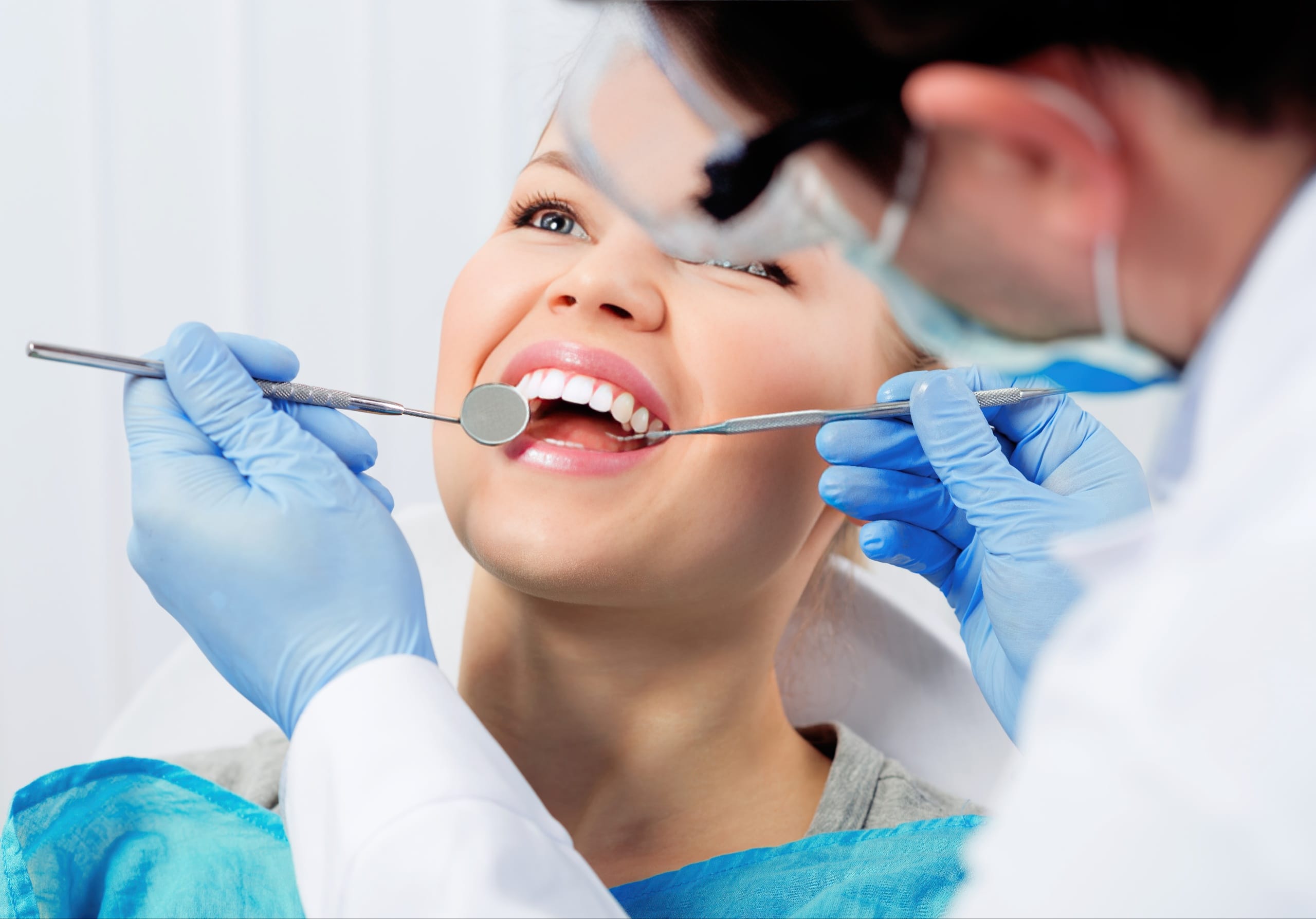
Regular dental cleanings provide you with a healthy, happy, clean, fresh, and beautiful smile when performed along with your daily flossing and brushing. At Paramount Dental, our skilled hygienists remove plaque and tartar, polish your teeth, improve your gum health, and give you the confidence of a healthy-looking and feeling smile.
Benefits
Dental cleanings are an important part of preventative dentistry (preventing oral health concerns) and provide the following benefits:
- Removes plaque and tartar that brushing and flossing alone can not remove.
- Helps reduce gum inflammation and bleeding caused by the buildup of plaque and tartar at the gumline.
- Polishes freshly cleaned teeth for a smoother, cleaner feel which helps you smile with confidence.
- Freshens breath by reducing the buildup that bacteria thrive on.
- Identifies early signs of gum disease, tooth decay, and other oral health concerns that are more easily treatable in the early stages.
- Maintains and protects your natural teeth so that they last as long as possible.
Procedure
Review of Oral Health History
Visits usually begin with a review of your oral health concerns such as any sensitivity, bleeding gums, or any other changes you have experienced since your last visit.
Plaque and Tartar Removal
Using specialized equipment, the hygienist or dental practitioner removes plaque and tartar from the teeth, both above and below the gum line, and in-between the teeth. This process is critical, as plaque forms into tartar and cannot be removed using a toothbrush and/or flossing.
Gum Health Evaluation
In addition to removing plaque and tartar the hygienist/dentist will evaluate your gums for redness, swelling, bleeding, receding gums or pocketing. These indicators help the dental team assess whether you are experiencing gum disease or if further periodontal treatments may be needed.
Tooth Polishing
Following removal of all buildup the teeth are polished to create a smooth surface on the enamel, and to remove surface stains leaving the teeth to feel clean and refreshing.
Home Care Guidance
The dental team may discuss home care products such as floss, water flossers, inter-dental brushes or other items to aid in preventing future buildup based upon individual needs. Recommendations for optimal home care practices can help you maintain control over plaque development.
Next Steps
Following your cleaning, you are encouraged to schedule your next routine cleaning. If gum disease, worn-down restorations, or any other issues with your teeth were found during the cleaning, then additional services may be suggested.
Candidacy & Alternatives
Dental cleanings are part of routine preventive care and are generally recommended twice a year. If, however, you have gum disease, diabetes, dry mouth, oral appliances, or restorations, then cleanings may be needed more often.
If you are experiencing active gum disease or deep buildup below the gumline, then your dentist may recommend periodontal therapy or a deep cleaning instead of a standard cleaning.
Cost & Insurance
Costs associated with a dental cleaning depend upon the extent of cleaning necessary, whether the cleaning includes an evaluation, examination, x-ray(s), or additional periodontal treatments are required.
Most insurance companies cover routine cleanings however, frequency and out-of-pocket costs vary significantly. Prior to visiting Paramount Dental, we can review your insurance policy to establish what will be covered.
If you have no insurance, we can determine if there are any discounts offered for new patients, membership programs available for individuals or families, or financial assistance available for payment. Please contact us prior to scheduling an appointment for information regarding payment terms.
Aftercare & Maintenance
Following a dental cleaning, patients’ teeth will typically feel smoother, and their gums will likely feel healthier. Recommended after-appointment oral hygiene habits include:
- Brush your teeth two (2) times per day using fluoride-based toothpaste
- Floss between your teeth at least once daily
- Minimize intake of sugar-rich beverages and foods that contribute to bacterial growth and cavity development
- Schedule your cleaning appointments at intervals recommended by your dental team.
- Contact us if you experience oral bleeding, swelling, pain, loose teeth, or persistent bad breath.
Good oral hygiene habits at home, along with consistent professional cleanings, help keep your teeth and gums strong for years to come.
Dental Cleaning FAQs
What happens during a dental cleaning?
During a dental cleaning, a dental professional removes plaque and tartar from the teeth, checks gum health, polishes the teeth, and may provide home care recommendations based on your needs.
Why do I need a cleaning if I have a good oral hygiene regimen?
Brushing and flossing are essential, but plaque unfortunately still collects in areas that are hard to reach, no matter how dedicated we are. Once that plaque hardens into tartar, only a dental professional can remove it safely.
How often should I schedule a dental cleaning?
The frequency in which you schedule a cleaning varies depending on your individual oral health needs. Many people prefer to include their cleanings as part of their regular preventative maintenance routine twice a year. However, those who experience issues such as chronic gum disease, frequently develop tartar, or suffer from dry mouth may require more frequent visits.
Is a dental cleaning painful?
Most routine cleanings are painless. You may be tender to the touch during or after your cleaning if you have inflamed or sensitive gums, or excessive amounts of tartar that need removal. Inform the dental team if you are sensitive so they can help ensure that you remain comfortable throughout the procedure.
Is a dental cleaning the same as a deep cleaning?
No. Routine dental cleanings focus on removing plaque and tartar on top of and around the gum line. Deep cleanings (also known as scaling and root planing) focus on treating and removing plaque and tartar under the gum line for patients suffering from active periodontal disease.
Can dental cleanings help with bad breath?
Yes. Removing plaque, tartar, and bacteria can help freshen breath. If bad breath persists after a dental cleaning, the dentist will investigate other potential causes such as gum disease, dry mouth, or cavities.
Will my teeth appear whiter after a cleaning?
Cleanings remove some surface stains which results in a brighter smile. However, cleanings alone will not alter the internal coloring of your teeth. Ask us more about professional whitening treatments if you want a brighter and whiter smile.