
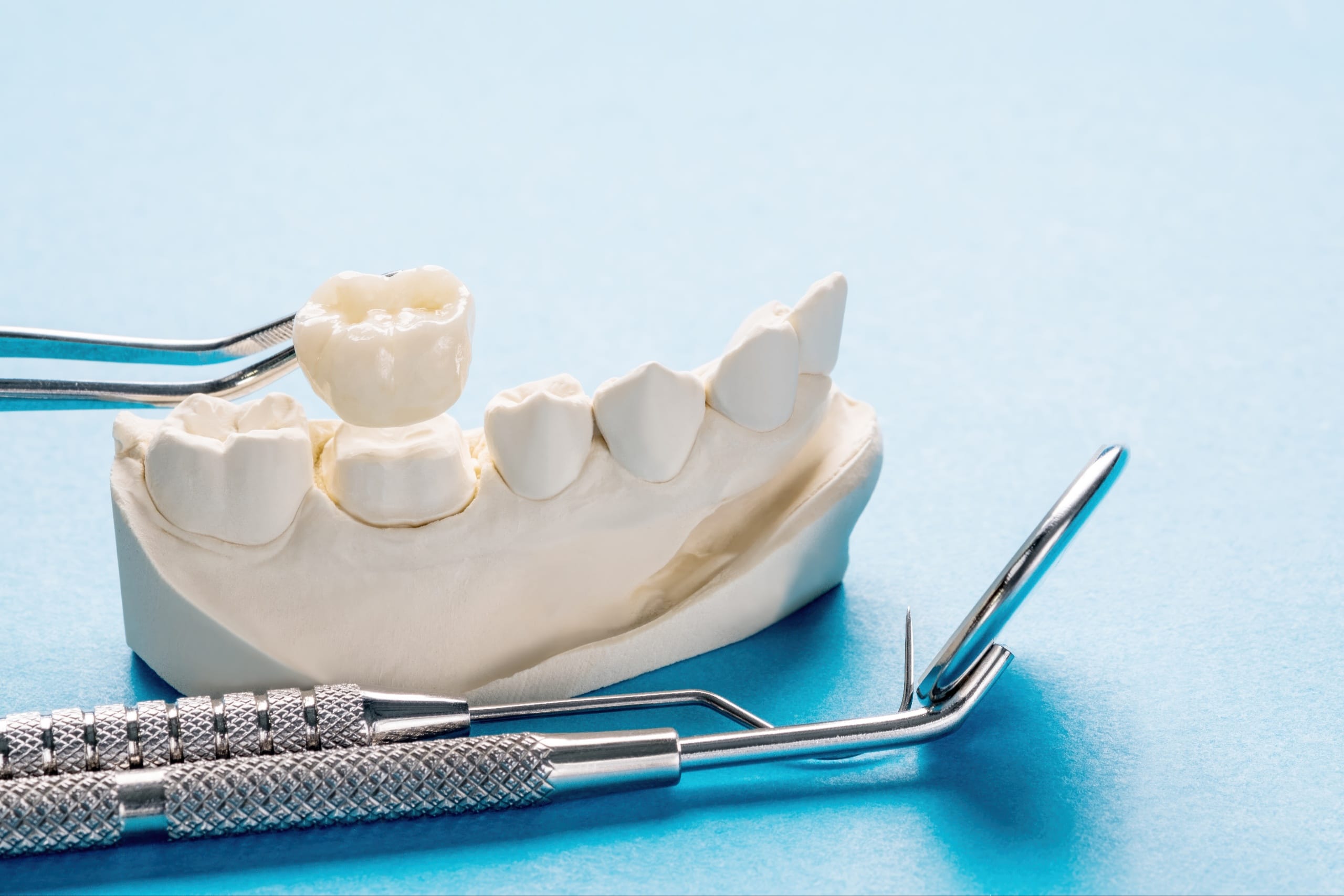
At Paramount Dental in Roseville, dental crowns restore and protect teeth affected by damage, decay, wear, or large existing restorations. A custom crown covers the visible portion of a tooth to help restore its shape, strength, and natural-looking appearance.
Benefits of Dental Crowns
A dental crown is a custom restoration that fits over an entire tooth above the gumline. It helps rebuild a tooth that is weakened, cracked, worn down, or too damaged for a standard filling alone. Dental crowns may be recommended to:
- Help protect weakened or fractured teeth.
- Restore a tooth’s shape, size, and chewing function.
- Improve the appearance of a damaged or discolored tooth.
- Support a bridge or complete an implant restoration.
- Protect a tooth after root canal therapy
Dental crowns are designed to blend in with your natural teeth. Crown materials may include ceramic, porcelain, zirconia, metal, or other options selected for the tooth’s location, bite forces, appearance goals, and clinical needs. Available crown materials at Paramount Dental are decided at your consultation and treatment planning visit.
Dental Crown Procedure
The dental crown procedure is a simple one:
- Examination and Treatment Planning – Our Roseville dentist evaluates the tooth needing treatment, the surrounding gums, and the bite to determine whether a crown is appropriate and whether any additional treatment is needed first.
- Digital Scans – A digital scan is taken to guide the creation of a custom crown. For a traditional lab-made crown, the tooth is carefully prepared so the restoration can fit over it securely. A temporary crown may be placed while the final restoration is being made.
- Crown Placement – After receiving your custom crown, our dentist checks the fit, contact points, bite, and appearance of the completed crown before securing it in place.
Many crown treatment plans require two appointments, though the number of visits and treatment timeline varies based on the tooth, material, and appointment availability.
Dental Crown Candidacy & Alternatives
You may be a candidate for a dental crown when:
- A tooth has significant damage but still has a healthy, stable foundation that can be restored.
- A tooth has large fillings, cracks, or fractures.
- A tooth has extensive wear, or substantial decay after the damaged area has been treated.
When tooth damage is minor, our Roseville dentist may recommend a filling, inlay, or onlay to preserve more healthy tooth structure. For selected cosmetic concerns, porcelain veneers that cover the front surface of a tooth rather than the entire visible tooth structure may also be an option.
If a tooth cannot be restored predictably, the dentist may discuss replacement options such as a dental bridge or dental implant. The most appropriate option depends on the condition of the tooth, bone and gum health, bite, and personal treatment goals.
Dental Crown Cost & Insurance
The cost of a dental crown depends on the tooth being treated, the crown material, the amount of preparation required, laboratory fees, and whether you need additional care such as treatment for decay or root canal therapy prior to the placement of the crown.
Dental insurance benefits vary by plan. Some plans may contribute toward crowns when treatment is considered restorative or medically necessary, while deductibles, annual maximums, waiting periods, and coverage percentages play a part in your out-of-pocket cost.
After your initial exam and treatment planning appointment, our Paramount Dental office team will provide a personalized treatment estimate and out-of-pocket cost. Specific insurance participation, financing plans, payment options, and promotional offers may also be discussed.
Dental Crown Aftercare & Maintenance
A crown is designed to function like a natural tooth, but it still needs consistent care. The underlying tooth and surrounding gums remain vulnerable to decay or gum disease if plaque is not removed effectively. Aftercare includes:
- Brushing twice daily with fluoride toothpaste and a soft-bristled toothbrush.
- Flossing daily around the crown and along the gumline.
- Keeping routine dental exams and professional cleanings.
- Avoiding chewing ice, hard candy, or non-food objects.
- Using a nightguard if recommended for clenching or grinding.
If at any point your crown feels loose, chips, cracks, causes ongoing sensitivity, or changes the way your teeth fit together, contact Paramount Dental at (916) 898-0003. Prompt evaluation and repair or treatment helps protect the crown and the tooth beneath it.
Dental Crowns FAQs
What is a dental crown?
A dental crown is a custom-made restoration that covers the entire visible part of a tooth. It helps restore a tooth’s shape, strength, function, and appearance after damage, decay, wear, or other concerns.
When is a crown better than a filling?
A filling may be appropriate for smaller areas of decay or damage. A crown is usually recommended when too much tooth structure is missing or is too weak for a filling to provide dependable support. Your dentist will evaluate the tooth and explain the most conservative and effective option.
How long does a dental crown last?
Dental crown longevity varies based on the material, bite forces, oral hygiene, diet, grinding habits, and the health of the tooth and gums. Regular preventive care is essential to protect your restoration for as long as possible.
Does getting a dental crown hurt?
Your dentist will explain comfort measures before treatment. Some temporary sensitivity after tooth preparation or crown placement can occur, but persistent or severe discomfort should be evaluated by the dental office.
How many visits does a dental crown take?
Many traditional crowns are completed in two appointments: one for tooth preparation and impressions or scans, and another for final placement. Treatment timing may vary depending on the crown material, laboratory process, and office appointment availability.
Can a crown be placed after a root canal?
Yes. A crown may be recommended after root canal therapy, particularly for teeth that need additional protection from fracture. Whether a crown is needed depends on the tooth’s location, remaining structure, bite forces, and your dentist’s evaluation.
Can a dental crown be replaced?
Yes. A crown may need replacement if it becomes worn, damaged, loose, or no longer fits properly. Your dentist can examine the crown and supporting tooth to determine whether repair, replacement, or another treatment is appropriate.