
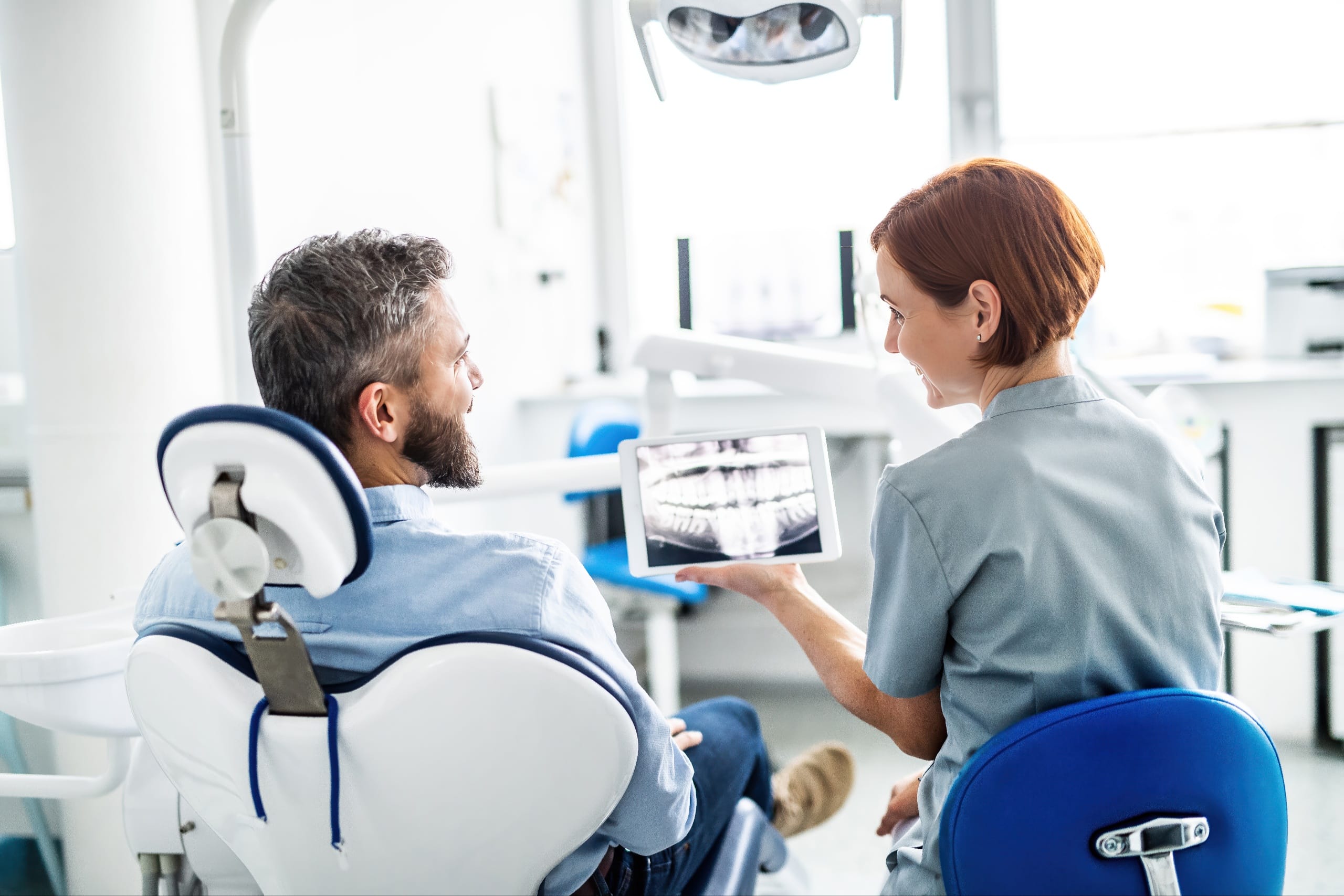
Some dental problems develop in areas not visible during a visual exam. At Paramount Dental in Sacramento, low-dose digital dental x-rays provide detailed images of your teeth, roots, jawbone, and surrounding structures, helping your dentist better understand your oral health.
Benefits of Dental X-Rays
A visual examination provides valuable information about your smile, but it cannot show everything happening beneath the surface.
Depending on the type of image taken, dental x-rays can help your dentist:
- Look for cavities between teeth or beneath existing dental work.
- Evaluate tooth roots and the bone supporting your teeth.
- Assess bone changes associated with gum disease.
- Look for signs of infection or other changes around a tooth root.
- Locate impacted or unerupted teeth.
- Evaluate areas associated with unexplained tooth pain, swelling, or dental trauma.
- Plan treatments such as restorations, orthodontic care, dental implants, root canal therapy, or tooth extractions.
X-rays work together with your dental exam, health history, symptoms, and other clinical findings. Your dentist does not rely on an x-ray alone to make treatment decisions.
What to Expect During Dental X-Rays
Dental x-rays are typically quick and noninvasive. Paramount Dental uses low-dose digital x-ray technology as part of its preventive diagnostic care.
Reviewing Your Needs
Before recommending new images, your dental team considers your dental and medical history, symptoms, risk factors, previous treatment, and any recent x-rays that may already be available.
If another dental office has taken x-rays recently, let Paramount Dental know. Existing diagnostic images may provide useful information and can help your dentist determine whether additional images are necessary.
Selecting the Right Type of X-Ray
Different dental x-rays show different areas of your mouth. Your dentist selects the type of image based on what needs to be evaluated.
- Bitewing X-rays: Show the crowns of the back teeth and areas between neighboring teeth. They can help evaluate cavities, existing restorations, and supporting bone levels.
- Periapical X-rays: Show an entire tooth from the crown to the end of the root and surrounding bone. They may be useful when evaluating tooth pain, swelling, trauma, or possible infection.
- Panoramic X-rays: Provide a broad image of the upper and lower jaws, teeth, jaw joints, and surrounding structures. They may be used to evaluate dental development, impacted teeth, orthodontic concerns, or oral surgery needs.
Taking the Images
For some images, a small digital sensor is positioned inside your mouth while the x-ray is taken. For panoramic imaging, you remain positioned at the machine while it captures a broader image around your head. The process usually takes only a short time.
Reviewing Your Results
Your dentist reviews your x-rays alongside the findings from your clinical examination. If something needs attention, the dental team can explain what the image shows and discuss whether monitoring, additional testing, preventive care, or treatment is recommended.
Candidacy & Alternatives
Dental x-rays are not automatically necessary at every visit or on the same schedule for every patient.
Your dentist may recommend imaging when:
- You have unexplained tooth pain or sensitivity.
- You have swelling or signs that may suggest an infection.
- A tooth is cracked, broken, or injured.
- Your dentist needs to evaluate possible cavities between teeth.
- There are concerns about periodontal bone loss.
- You have existing crowns, fillings, implants, or other dental work that needs evaluation.
- You are preparing for orthodontics, an extraction, dental implants, or another treatment that requires information below the surface.
New patients may be advised to have x-rays when existing images are unavailable, outdated, or do not provide the information needed for diagnosis. However, being a new patient alone does not mean every type of x-ray is automatically required.
Visual examinations, periodontal measurements, and intraoral photographs can provide additional information, but they cannot always show tooth roots, internal tooth structures, or areas of bone that are visible on radiographs. These tools often complement x-rays rather than replace them.
If you are pregnant or think you may be pregnant, tell your dental team. Dental imaging can still be used when clinically necessary, and your dentist can discuss why an image is recommended and the precautions appropriate for your care.
Dental X-Ray Cost & Insurance
The cost of dental x-rays depends on the type and number of images required. Fees can also vary when x-rays are completed as part of a larger dental examination.
Many dental insurance plans include diagnostic x-rays as part of their benefits, although coverage and frequency limitations vary. Some plans may pay for certain types of images only at specific intervals. The office staff in Sacramento is happy to review your specific insurance information and provide an estimate of your expected costs before care begins. Visit the insurance and financing page to learn more about payment options.
Aftercare & Maintenance
Dental x-rays do not require recovery time. Your dentist will review the findings and explain whether any additional care is recommended. Depending on what is found, your next step may include:
- Continuing your normal preventive-care schedule.
- Scheduling a professional dental cleaning.
- Monitoring an area at a future visit.
- Treating a cavity or damaged restoration.
- Evaluating gum or bone changes.
- Addressing infection, tooth damage, or another dental concern.
You do not need x-rays simply because a certain amount of time has passed. Future imaging should be based on your current oral health, symptoms, previous images, treatment history, and individual risk factors.
Contact Paramount Dental at (916) 443-1905 if you develop tooth pain, swelling, a broken tooth, changes in your bite, or another new dental concern rather than waiting until your next routine appointment.
Dental X-Rays FAQs
Why do dentists take dental X-rays?
Dental x-rays allow your dentist to see areas that are difficult or impossible to evaluate during a visual examination alone. They can provide information about cavities, tooth roots, supporting bone, impacted teeth, infections, and other concerns that may affect your treatment plan.
Are dental X-rays safe?
Dental imaging uses relatively low levels of radiation, and x-rays should be taken only when there is a clinical reason for them. Modern digital technology and proper imaging techniques help keep exposure as low as reasonably achievable while still producing useful diagnostic images.
How often should I get dental X-rays?
There is no single x-ray schedule that is right for everyone. Your dentist considers your age, symptoms, cavity and gum-disease risk, dental history, previous images, and current clinical findings before recommending new x-rays.
What are bitewing X-rays used for?
Bitewing x-rays show the crowns of your back teeth and areas between neighboring teeth. They can help your dentist look for cavities between teeth, evaluate existing restorations, and assess supporting bone levels.
What is a periapical X-ray?
A periapical x-ray shows an entire tooth, including the crown, root, root tip, and nearby bone. Your dentist may recommend one when evaluating tooth pain, swelling, trauma, infection, or another concern involving a specific tooth.
What is a panoramic X-ray?
A panoramic x-ray provides a broad view of your upper and lower jaws, teeth, jaw joints, and nearby structures in a single image. It may be useful for evaluating impacted teeth, dental development, orthodontic needs, or oral surgery planning.
Can I have dental X-rays while pregnant?
Current dental guidance considers clinically necessary dental radiographs appropriate during pregnancy. Tell your dental team if you are pregnant or may be pregnant so your dentist can consider your individual needs and explain why an image is recommended.
Should I bring X-rays from my previous dentist?
Yes, recent x-rays may be helpful. Let Paramount Dental know if another office has diagnostic images available. Your dentist can review them and determine whether they provide the information needed or whether updated images are appropriate.
Do dental X-rays hurt?
No. Dental x-rays are noninvasive and should not be painful. Some patients may briefly notice pressure from an intraoral sensor, so let your dental professional know if you are uncomfortable or have a sensitive gag reflex.
Get a clearer view of your oral health with personalized diagnostic care from Paramount Dental. Request an appointment today or call (916) 443-1905 if you have questions about dental x-rays or your recommended imaging schedule.