
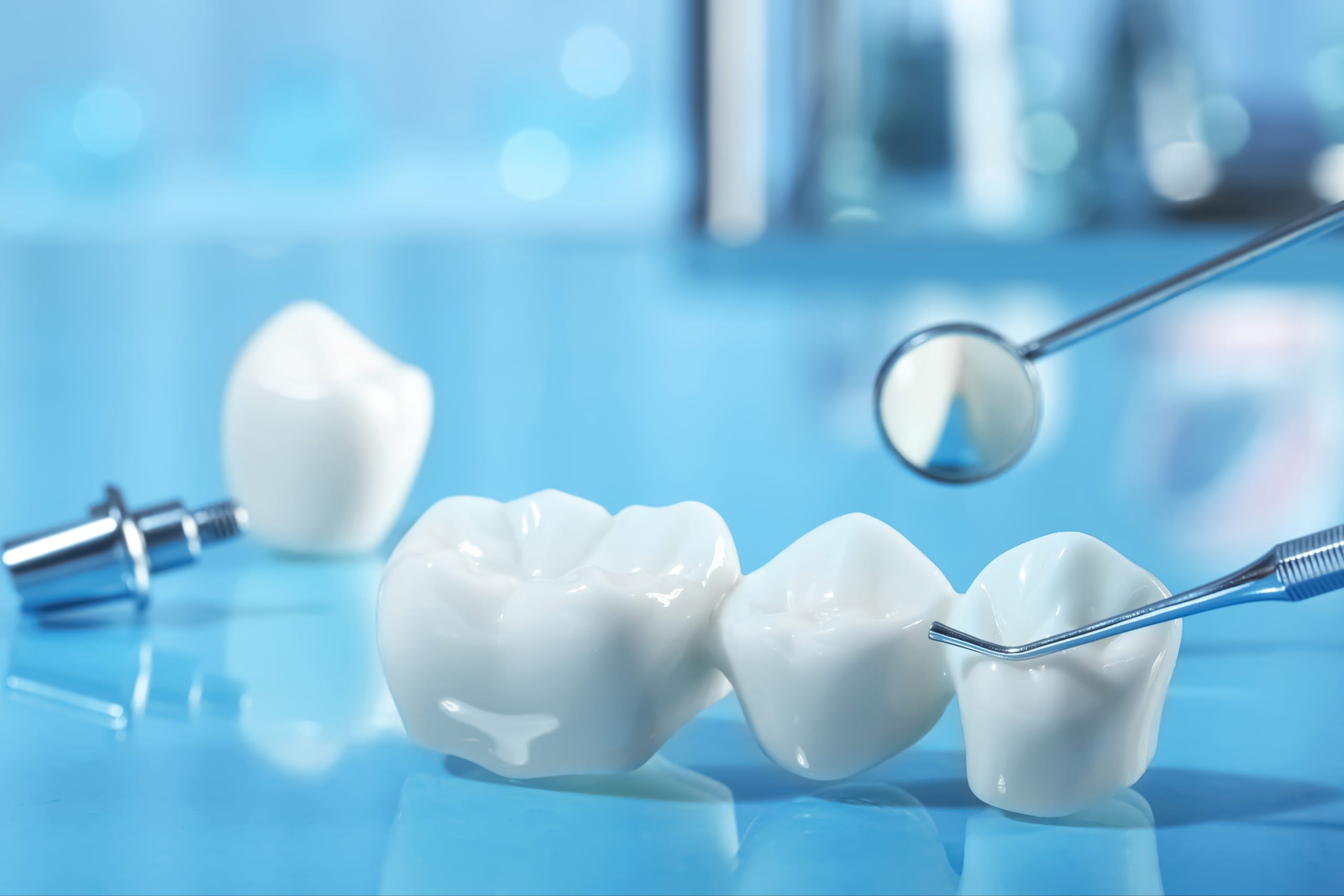
At Paramount Dental in Roseville, dental bridges offer a dependable way to replace one or more missing teeth in a row. A custom bridge helps restore the appearance of your smile while supporting comfortable chewing and clearer speech.
Every smile is different. During your personal consultation, our dental team reviews your bite and your long-term goals and recommends the most appropriate replacement option.
Benefits of Dental Bridges
A dental bridge fills the space left by a missing tooth or several adjacent missing teeth. Traditional bridges typically use crowns on the teeth beside the gap to support one or more replacement teeth, called pontics. A dental bridge provides the following benefits to most patients:
- Replaces one or more missing teeth in a row
- Restores the look of a complete smile
- Supports more comfortable chewing and speaking
- Helps limit shifting of nearby teeth over time
- Uses custom materials selected to complement surrounding teeth
- Offers a fixed, non-removable option for many patients
For patients who are also exploring other tooth-replacement options, dental implants may be an alternative worth discussing during a consultation.
Dental Bridge Procedure
The dental bridge process begins with a comprehensive examination and a conversation about your oral health, cosmetic goals, bite, and available treatment options. Your dentist will determine whether a traditional bridge, implant-supported bridge, partial denture, or another approach is best suited to your needs.
For a traditional bridge, the teeth on either side of the gap are usually prepared to receive crowns. Your dentist then takes an impression or digital scan so the bridge is designed for a comfortable fit and natural-looking appearance.
A temporary restoration may be placed while a dental laboratory creates your final bridge. Once the custom bridge is ready, your dentist checks the fit, bite, and appearance before securely placing it. Traditional bridge treatment often requires more than one visit, although your personal timeline can vary.
Before treatment begins, Paramount Dental will review the expected steps, answer your questions, and explain any instructions specific to your case.
Dental Bridge Candidacy & Alternatives
You may be a good candidate for a dental bridge if you have:
- One or more missing teeth in a row
- Neighboring teeth that can provide appropriate support
- Healthy gums
- A stable bite
- Good daily oral hygiene
Some patients may need treatment for tooth decay, gum disease, or other concerns before moving forward with a bridge. The condition of the supporting teeth and the location of the missing tooth or teeth can affect which type of restoration is recommended.
Alternatives to a traditional dental bridge may include:
- Dental implants: A replacement tooth root and restoration that avoids preparing neighboring teeth in some cases.
- Implant-supported bridges: A bridge supported by implants rather than natural teeth, when clinically appropriate.
- Removable partial dentures: A removable option that replaces several missing teeth.
- No replacement: This option may allow nearby teeth to shift or affect chewing, so it should be discussed carefully with your dentist.
Ask your dentist about all of your options and alternatives during your consultation.
Dental Bridges Cost & Insurance
The cost of a dental bridge varies based on the number of teeth being replaced, the bridge design, the material selected, the condition of supporting teeth, and whether additional care is needed before placement.
Dental insurance benefits vary by plan. Some plans contribute toward restorative treatment when a bridge is considered medically necessary. Deductibles, waiting periods, annual maximums, and coverage percentages specified by your plan determine your out-of-pocket cost.
After your initial exam and agreed upon treatment plan, the Roseville office team will provide you with a personalized treatment estimate and help you understand available financing, payment plans, and participation with specific insurance plans.
Dental Bridge Aftercare & Maintenance
A bridge is fixed in place, but plaque and food particles can still collect around the gumline and beneath the replacement tooth. Consistent home care and regular dental visits are important for protecting your bridge, gums, and supporting teeth.
- Brush twice daily with a soft-bristled toothbrush and fluoride toothpaste.
- Clean between teeth every day using floss, a floss threader, an interdental cleaner, or another tool recommended by your dentist.
- Pay close attention to the area beneath the pontic (false tooth) and around the supporting crowns.
- Attend routine exams and cleanings so your dentist can monitor the bridge and surrounding teeth.
- Avoid chewing ice, hard candy, or other items that may damage a restoration.
Contact Paramount Dental at (916) 898-0003 if your bridge feels loose, chips, causes persistent discomfort, or changes the way your teeth come together.
Dental Bridges FAQs
What is a dental bridge?
A dental bridge is a restoration used to replace one or more missing teeth. A traditional fixed bridge commonly includes replacement teeth supported by crowns placed on the teeth beside the gap.
How long does a dental bridge last?
A bridge may serve for many years with attentive home care and regular dental visits. Its lifespan depends on factors such as the bridge material, bite forces, oral hygiene, gum health, and the condition of the supporting teeth.
Does getting a dental bridge hurt?
Your dentist will take steps to keep you comfortable during treatment. Some sensitivity or tenderness may occur after the teeth are prepared, but this is usually temporary. Contact the office if discomfort is severe or does not improve.
Can a dental bridge replace more than one tooth?
Yes. A bridge can replace one tooth or several adjacent missing teeth, depending on the location of the gap, the health of neighboring teeth, and your bite. Your dentist will recommend a design that is appropriate for your situation.
Can I eat normally with a dental bridge?
After you adjust to your new bridge, many patients can eat comfortably. Start with softer foods as instructed after placement, then return to your usual diet gradually. Avoid using your bridge to bite hard objects or open packaging.
Can a bridge be repaired if it breaks or feels loose?
Sometimes a bridge can be repaired or re-cemented, but the right solution depends on the cause of the problem and the condition of the bridge and supporting teeth. Schedule an evaluation promptly rather than trying to fix it at home.
Is a dental implant better than a bridge?
Neither option is automatically best for every patient. Implants and bridges have different treatment timelines, costs, maintenance needs, and clinical considerations. Your dentist can explain which option best supports your oral health and goals.