
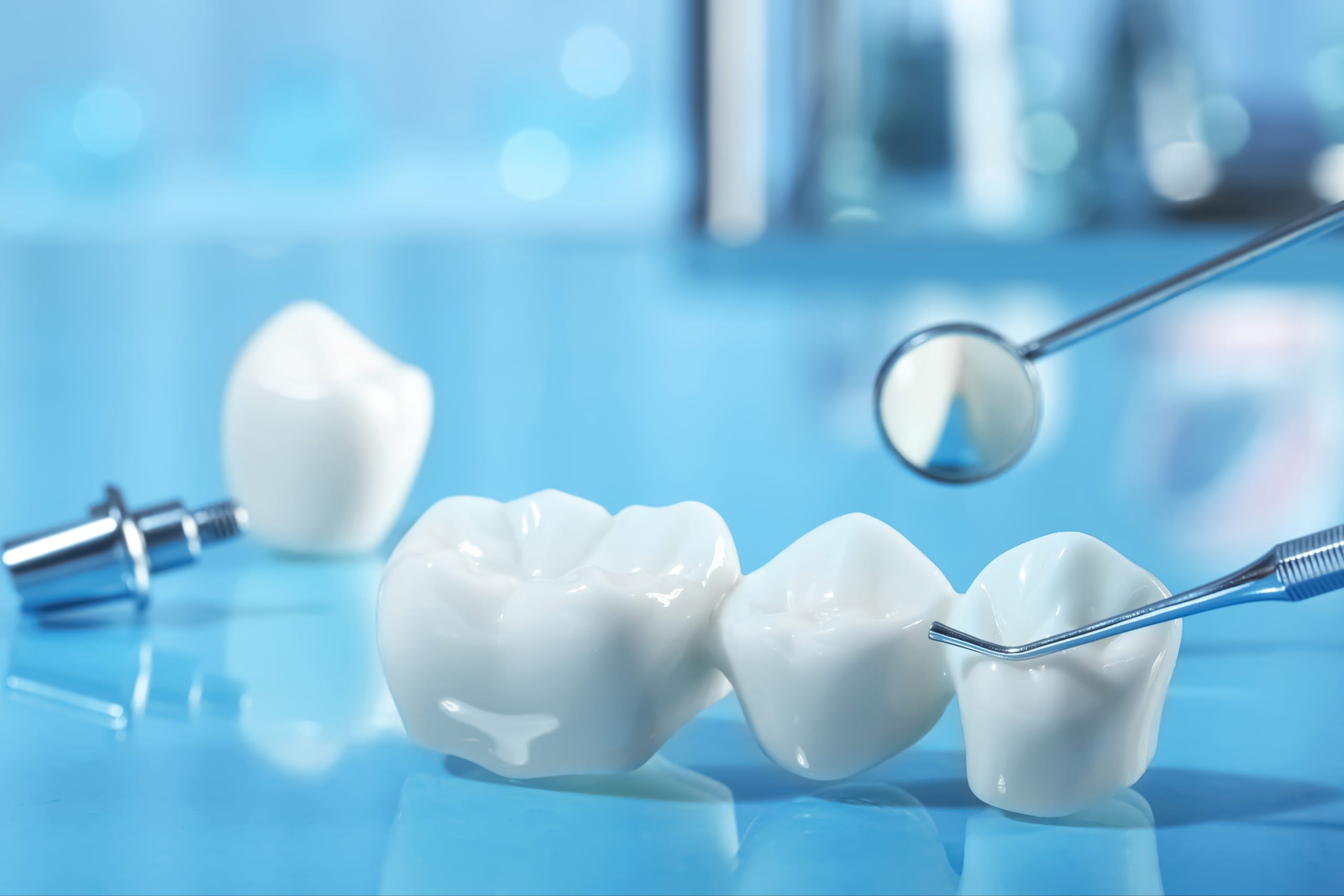
A missing tooth often changes the way you chew, makes certain words feel less natural to pronounce, or causes uneasiness when smiling. At Paramount Dental in Sacramento, a dental bridge can close that space with a fixed restoration designed around your bite and smile.
Benefits of Dental Bridges
A dental bridge replaces a missing tooth or a short span of missing teeth with connected restorations. In a traditional design, crowns on nearby teeth provide support for the replacement tooth or teeth in the middle. A bridge is a practical option for patients who prefer not to remove an appliance for cleaning or overnight storage. Following are some of the additional benefits:
- Closes a visible space caused by missing teeth.
- Restores a stable chewing surface.
- Supports clearer speech for some patients.
- May help maintain spacing around the gap.
- Provides a fixed alternative to a removable partial denture.
- Can be color-matched to blend with surrounding teeth.
What to Expect During the Dental Bridge Procedure
Consultation and Treatment Plan
Your first visit focuses on planning. Your dentist examines the gap, supporting teeth, gum tissue, and bite. X-rays or other imaging may be used when needed to understand the health of the roots and bone around the area. With this information, the dentist then recommends a treatment plan that is customized to your needs.
Preparing the Supporting Teeth
For a conventional bridge, the teeth beside the missing tooth are reshaped so they can receive crowns. Local anesthetic is typically used to keep you comfortable during this step.
Creating Your Custom Restoration
After tooth preparation, your dentist takes an impression or digital scan. This information is used to create a bridge that fits your bite and complements the size, shade, and contours of nearby teeth. A temporary restoration may be placed while the final bridge is being made.
Placing the Final Bridge
When the completed bridge is ready, your dentist evaluates its fit, appearance, and bite before securing it. Small adjustments may be made so your teeth come together comfortably. Your treatment timeline depends on the bridge design, laboratory process, and any care needed before placement.
Dental Bridge Candidacy & Alternatives
A bridge may be considered when you have:
- A missing tooth or several neighboring missing teeth
- Enough healthy surrounding tooth support
- Healthy gums
- Good oral hygiene
If you are experiencing active tooth decay, infection, gum disease, or bite-related concerns, then your dentist may recommend treatment of these concerns prior to a dental bridge treatment.
Alternative tooth-replacement choices may include:
- Dental implants: A replacement root and restoration that may preserve neighboring tooth structure.
- Implant-supported bridges: A bridge held by implants instead of natural supporting teeth, when appropriate.
- Partial dentures: A removable option that can replace several missing teeth.
- No replacement: An option that should be discussed carefully because the open space can affect nearby teeth and function over time.
Your dentist will explain the pros and cons of each approach, including treatment time, maintenance, cost, and expected function so that you feel confident in your treatment decision.
Dental Bridges Cost & Insurance
A dental bridge is custom treatment, so the cost depends on the number of teeth being replaced, the type of support needed, the selected materials, and any preparatory care required.
Insurance coverage for dental bridge treatment is determined by your individual plan. Our Sacramento office team will review your treatment plan, insurance coverage, and provide an estimate prior to beginning treatment. For patients with no insurance or limited insurance coverage, financing and payment options may be available.
Dental Bridge Aftercare & Maintenance
A bridge is fixed in place, but the natural teeth supporting it still need protection. Daily cleaning is especially important near the gumline and beneath the replacement tooth, where food debris and plaque can collect. Following dental bridge placement we recommend:
- Brushing twice a day using fluoride toothpaste and a soft-bristled toothbrush.
- Cleaning between teeth every day with floss or another recommended interdental tool.
- Using a floss threader, interdental brush, or water flosser as directed to clean beneath the bridge.
- Scheduling regular exams and cleanings to monitor the bridge and supporting teeth.
- Avoiding chewing ice, hard candy, or non-food objects that could damage a restoration.
Call Paramount Dental at (916) 443-1905 if your bridge feels loose, your bite changes, or you notice persistent sensitivity, pain, or a chip in the restoration.
Dental Bridges FAQs
What keeps a dental bridge in place?
Traditional bridges are commonly supported by crowns on the teeth adjacent to a gap. In some cases, implants may support a bridge instead. Our dentist will recommend the design that best matches your oral health needs.
Will my dental bridge look like a natural tooth?
Your bridge is custom designed to complement surrounding teeth in shape, size, and color. Exact shade matching can vary based on the material selected and the characteristics of your natural teeth.
Do supporting teeth need to be altered for a bridge?
With a traditional bridge, the teeth next to the missing tooth are usually prepared for crowns. Dental implants may be an alternative for patients who want to avoid preparing neighboring teeth and are candidates for implant treatment.
How do I decide between a bridge and an implant?
The best option depends on the condition of nearby teeth, bone and gum health, the location of the missing tooth, treatment timing, budget, and your preferences. A consultation gives you an opportunity to compare each option clearly.
Can I eat normally with a dental bridge?
Most patients return to comfortable everyday eating after adjusting to their bridge. Your Sacramento dentist may recommend softer foods immediately after placement and advise you to avoid hard or sticky foods that could stress the restoration.
Does a dental bridge require special cleaning?
Yes. The area beneath the replacement tooth needs daily attention because a standard piece of floss cannot pass directly through it. Our dental team can show you how to use a floss threader, interdental brush, or another cleaning aid.
What should I do if my bridge feels loose?
Contact our office promptly rather than trying to reattach or repair the bridge yourself. We will help determine whether the bridge can be re-cemented, repaired, or needs replacement.