
Making the right decision for your smile comes with benefits you can enjoy for years to come. If you are on this journey, you will come across veneers, crowns, or bonding as options. Each of these cosmetic dentistry procedures can restore function and appearance.
However, one may be more suitable for you depending on your situation and preferences. With this ultimate guide to veneers, crowns, and bonding, we will help you choose the best procedure for a confident smile.
What are Veneers?
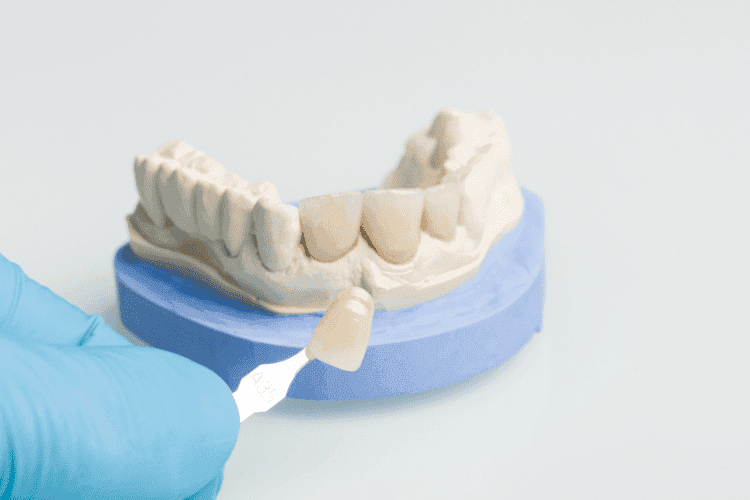
Dental veneers are thin, custom-made shells designed to cover the front surface of healthy teeth. They match your natural tooth color and shape, providing a flawless look. Porcelain or composite resin veneers are the most popular options because they match the natural tooth structure and look.
Dental veneers are ideal for people who want to correct issues such as chips on and gaps between teeth. They are also ideal for covering stains, offering a long-lasting, stain-resistant, and natural-looking finish.
Procedure
Getting veneers is a minimally invasive procedure that usually takes two visits. During the first visit, the cosmetic dentist prepares the tooth by removing small amounts of enamel. This will provide space for the veneers to sit well with the other teeth for a natural look.
Your dentist will then take impressions and send them to the lab, where they will create your porcelain veneers or make them from composite resin.
During the second visit, the dentist places the veneers onto your teeth using an adhesive or cement, then cures them with an ultraviolet lamp. Note that veneers do not cover the entire tooth, only the front surface.
Benefits of Veneers
- Minimal enamel removal.
- Natural appearance and feel.
- Stain-proof.
- Porcelain veneers can last up to 20 years.
- Quick transformation; in just two appointments.
Cons of Veneers
- Increased sensitivity after enamel removal.
- Veneers typically need lifetime maintenance every 10 to 20 years.
- They can chip and will require replacement rather than patching.
- They can cause irritation if not fitted perfectly.
- Veneers cover only the front surface, so you are still susceptible to tooth decay.
Maintenance and Aftercare
- Good dental hygiene, including regular brushing and flossing.
- Go for regular dental checkups.
- Avoid habits that can damage them, such as biting into hard objects.
- Wear mouth guards during sports and use alcohol-free mouthwash.
What are Crowns?
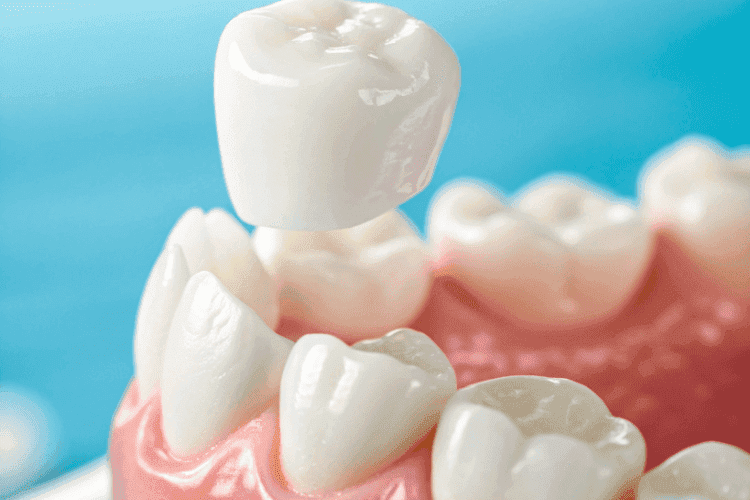
Dental crowns are custom caps that a dentist places over a damaged or decayed tooth to restore its shape, size, and strength. While people consider dental crowns a cosmetic procedure, they are restorative because they structurally rebuild the tooth. They also cover the whole tooth.
There are many types of crowns, including metal, ceramic, porcelain, Porcelain-Fused-To-Metal, and resin. Metal crowns are best for back teeth because they are strong, while ceramic and porcelain crowns are best for visible teeth because they match the natural tooth color.
Procedure
The procedure involves two visits and more extensive tooth preparation. In the first visit, the dentist will prepare the tooth by removing enamel wear and decay. Some people also get root canal therapy if the decay has reached the nerve.
The dentist then reshapes the tooth for fitting and takes an impression for the dental lab to create your crown. You will receive a temporary crown at the end of the procedure.
During the second visit, your dentist removes the temporary crown and then places and cements your permanent crown. It should match the surrounding teeth and function just as well.
Benefits of Crowns
- Strengthens weak teeth, making them suitable for biting and chewing all types of food.
- Prevents fractures and stops cracks from reaching the root.
- Restores bite alignment, allowing comfortable smiling.
- Crowns typically don’t slip.
- Long-lasting, with options such as gold and zirconia lasting a lifetime.
- Can be used in many applications, including anchoring dental bridges and covering dental implants.
- Dental insurance often covers a part of the cost.
Cons of Crowns
- Removes a lot of the existing tooth structure to make room for the crown.
- Increased sensitivity after enamel removal.
- Bacteria can still pass through the gum margin without proper care.
- Some crowns, such as zirconia, are harder than natural teeth and can wear down opposing teeth.
Maintenance and Aftercare
- Scheduling regular dental checkups.
- Brush the gum line.
- Floss correctly.
- Use alcohol-free mouthwash.
- Avoid using teeth as tools.
What is Tooth Bonding?
Tooth, cosmetic, or dental bonding is a procedure where a tooth-colored composite resin is applied to correct imperfections in teeth. These imperfections are usually minor chips, cracks, discoloration, or gaps. Tooth bonding can also lengthen or change the shape of a tooth.
Procedure
Dental bonding is one of the least invasive cosmetic dentistry procedures because it is a cosmetic fix. It requires minimal tooth preparation and only one visit. Your dentist will shape the composite bonding material to match your tooth. They will apply it to the tooth, make adjustments to make sure it fits, and cure it with a special light. Polishing then follows to make sure it blends with other teeth.
Benefits of Bonding
- Unlike veneers and crowns, bonding takes only one visit for a quick smile makeover.
- Painless.
- Non-invasive with minimal to no enamel removal.
- Fully reversible.
- Easy to repair in case of chipping.
Cons of Bonding
- Prone to staining because the bonding resin is slightly porous.
- Prone to chipping because the bonding resin is softer.
- Dependent on the dentist’s freehand skills to look natural.
Maintenance and Aftercare
- Avoid habits that may cause damage, such as biting hard objects.
- Limit food and drinks that may cause staining, such as coffee and colored sauces.
- Rinse after eating to prevent stains.
- Use a soft-bristle toothbrush.
- Use an alcohol-free mouthwash.
- Wear a mouth guard.
Summary: Veneers vs Crowns vs Bonding
| Feature | Veneers | Crowns | Bonding |
|---|---|---|---|
| Procedure | Minimal tooth preparation | Extensive preparation of the underlying tooth structure | Minimal tooth preparation |
| Durability | 5-20 years | 10 years to a lifetime | 5-7 years |
| Aesthetics | Natural look | Natural look with proper fit | Natural, but may stain |
| Cost | Moderate to High | High | Low |
| Best for | Chipped discolored teeth | Extensive decay, cracked teeth, severely damaged teeth | Minor imperfections, small gaps |
| Maintenance | Regular checkups, no grinding | Regular checkups, avoid grinding | Regular checkups, avoid hard objects |
| Placement | Ideal for the front teeth | Best for front and back teeth, depending on the material | Suitable for front teeth only |
What Situations are Best for Each Procedure?
In the question of veneers vs crowns vs bonding, the ideal treatment plan often depends on a few key factors, such as cost and tooth health. However, here’s a good guide to go on:
- Bonding: Best for cosmetic improvement, especially for discolored or misshapen teeth. They are also best for small chips and fixing a single tooth. Because it’s reversible, it’s a good way to test a new look.
- Veneers: Ideal for a full smile makeover if the natural enamel has stains or if your teeth are crooked. It creates a uniform, stain-proof row of teeth.
- Crowns: Ideal for broken teeth, tooth wear, post-root canal treatment, large fillings, and dental implants, as they restore full function. A full coverage crown is the only option that provides protection for the whole tooth structure, rather than just the tooth surface.
Paramount Dental: Cosmetic and Restorative Dentistry Experts
At Paramount Dental, we take pride in providing high-quality care with a personal touch. If you’re considering veneers, crowns, or bonding, our team is here to guide you through each procedure and offer the best cosmetic improvement services.
Our dental veneers are natural-looking and provide lasting transformations depending on your needs. We also offer dental crowns as part of our restorative dentistry services following tooth decay, root canal treatment, all-on-4 dental implants, or fillings.
And if you just need a slight modification on your smile, consider our dental bonding services to fix chips, fill small gaps, hide stains, and smooth uneven edges. With our services, you will have a natural, long-lasting smile.
FAQs
Is the Procedure for Bonding, Veneers, or Crowns Painful?
Dental bonding is painless, and patients rarely need anesthesia. Patients getting veneers will receive local anesthesia, which will lead to a feeling of pressure and vibration when the dentist shaves off the enamel. However, there is no pain during this procedure. Dental crowns require local anesthesia because the procedure is invasive. Therefore, you will experience pressure, not pain.
Why do Dentists Advise Against Veneers?
Dentists may advise against veneers because you may have underlying health issues, such as untreated decay and gum disease. Veneers will mask rather than treat these issues. Also, a dentist may refuse veneers if you do not have enough natural tooth enamel for bonding or if you grind your teeth.
Which is Best, Bonding or Veneers?
Veneers are more durable and offer a more permanent solution. Bonding is more ideal for smaller repairs, such as minor cracks.
Is Bonding Better than Crowns?
Bonding is more affordable and less invasive, but does not provide the same long-term durability as crowns. Crowns are more durable but will cost more.
Which Looks Better, Veneers or Crowns?
Veneers offer a more natural appearance for cosmetic purposes, while crowns restore function and protect heavily damaged teeth. However, some options, such as ceramic crowns, also offer a natural appearance.
Final Thoughts
Veneers, crowns, and bonding are good procedures that can restore your smile. The choice among the three often depends on your needs and overall oral health. Always consult with a dental health expert for a good assessment and recommendation for restoration.