
Types of Crowns for Teeth
Dental crowns are a good solution for damaged or weak teeth because they restore function and make your teeth look natural. Because crowns come in many forms, people with discolored or broken teeth can turn to dental crowns for results that blend with their smile. They are also suitable for people with tooth decay and those who want a cosmetic treatment.
In this guide, we’ll explore the different types of dental crowns and how to determine which is best for your unique situation.
Dental Crown Procedure
Dental crowns are custom-made caps that cover a damaged or worn-down tooth to restore its shape, size, strength, and appearance. Dental crown placement is a restorative procedure that involves the following
- Preparation: During the first visit, the dentist will prepare the tooth by removing any enamel wear, old fillings, and decay. You may also get a root canal if the decay has reached the nerve. The dentist will then reshape the tooth to make sure the crown fits well. After shaping, your expert will take an impression of the tooth and send it to a dental lab, where they will create a custom crown.
- Temporary Crown: Before the first appointment ends, your dentist will place a temporary crown (usually acrylic or composite resin) to protect the natural enamel. These are weak and require some extra care.
- Placement of the Permanent Crown: In the second visit, your dentist removes the temporary crown and fits the final crown, adjusting it for comfort and appearance. Once the fit is perfect, your dentist cements it into place.
The result is a tooth that looks natural and functions just like a healthy one, allowing you to eat and speak comfortably.
The Most Common Types of Dental Crowns
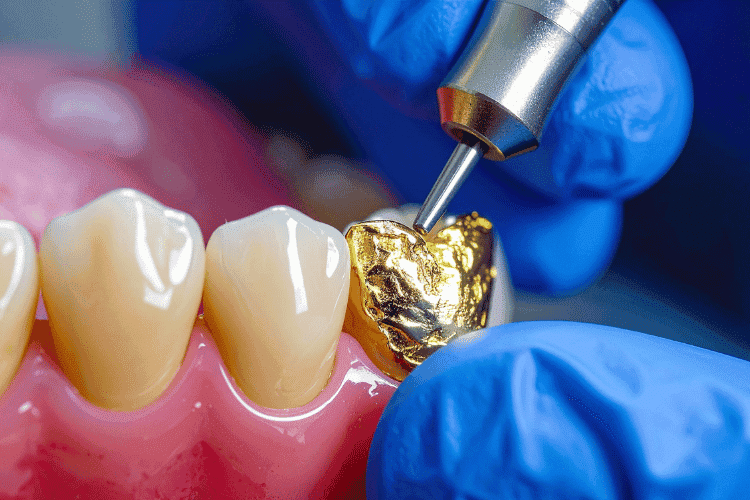 Photo by TrueCreatives on Canva
Not all crowns are gold. Some are made of porcelain or other materials. There are also same-day crowns. Here’s a closer look at the types of dental crowns and who they are best for:
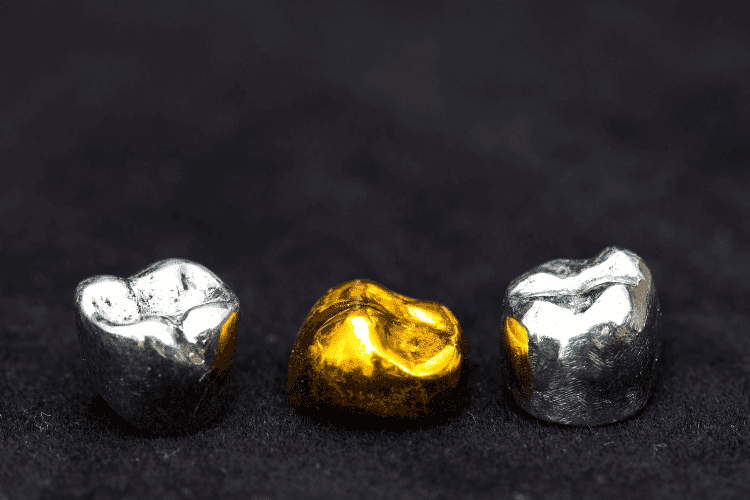
Metal Crowns
Metal crowns offer durability and strength, making them ideal for back teeth that experience heavy chewing. They are often made from gold, chromium, nickel, and palladium. These metals are good for long-term durability, which is ideal for people with chronic teeth grinding (bruxism).
Because metal is very strong, even when thin, the dentist doesn’t have to shave down your natural tooth as much to fit the crown. This preserves more of your enamel. Also, metal crowns are biocompatible.
It’s important to note that metal crowns are an alloy. The different composition levels are what often affect price.
For example, high noble compositions contain at least 60% precious metal, such as gold crowns and platinum. This type of crown will cost more than those made from non-precious metals such as cobalt, which are often cheaper than porcelain crowns.
- Best for: Back teeth (molars).
- Advantages: Long-lasting, resistant to wear and tear, minimal enamel removal.
- Shortcomings: Metallic color is highly visible and less visually pleasing than other options.
- Cost: Some are more affordable compared to porcelain crowns.
All-Ceramic or Porcelain Crowns
All-ceramic crowns offer a good match to your natural teeth. This makes them a great option for front teeth. These crowns do not create a dark line at the gum if your gums recede over time. Also, all-ceramic or porcelain crowns provide enough strength for daily biting.
However, they are more brittle than metal and can fracture if you grind your teeth or chew on ice. If you have a habit of biting nails, these may not be the most long-lasting crowns for your teeth. As for cost, all-ceramic or porcelain crowns are more expensive because of the material and labor to make them match the shade and shape of the natural teeth in a dental lab.
- Best for: Front teeth.
- Advantages: Visually pleasing, matches natural tooth color, suitable for people with metal allergies.
- Shortcomings: Less durable than metal crowns, may wear down faster.
- Cost: Higher due to materials and labor.
Porcelain-Fused-To-Metal Crowns (PFM)
Porcelain-Fused-To-Metal Crowns (PFM crowns) are strong and closely match your natural tooth enamel. These crowns are metal on the inside with a porcelain coating on the top. Therefore, the crown can withstand heavy biting and will look natural.
PFM crowns are an ideal choice for dental bridges because the metal framework provides the bridge. However, note that the metal base underneath the bottom of the crown can sometimes be visible, especially if your gum tissue recedes over time. Also, as the glaze of the porcelain wears off, it may affect the opposing teeth. PFM dental crowns cost is in the mid-range.
- Best for: Dental bridges.
- Advantages: Strong, aesthetic, long-lasting.
- Shortcomings: The metal layer can sometimes show through the porcelain at the gum line.
- Cost: Mid-range, crowns combine visuals and strength.
Pressed Ceramic Crowns
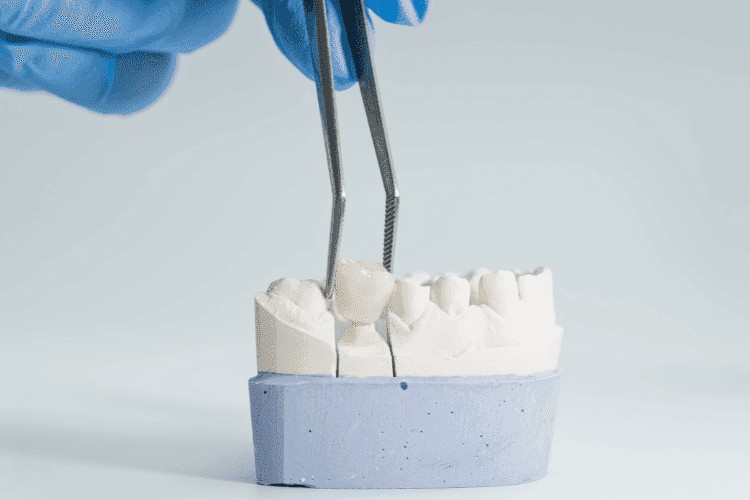 Photo by Maximusnd Zahar on Canva
Many people know pressed ceramic crowns by the brand name ‘E-max’ or by the technical name Lithium Disilicate. They are a good option because they solved the brittleness of older all-porcelain crowns.
Pressed ceramics are different because dental labs produce them by liquefying a solid ingot of high-strength ceramic under intense pressure and heat, then forming it into a mold. Compared to the standard porcelain, which experts layer by hand and bake, pressed ceramics are tougher and denser because of the hard inner core. Also, E-max crowns still maintain a natural look that matches the surrounding teeth.
Pressed ceramic crowns are best for front and back teeth, preferably the premolars. Even though they are strong, they are still ceramic that can crack or chip under pressure, such as grinding your teeth.
- Best for: Both front and back teeth (premolars).
- Advantages: Stronger than all-ceramic crowns, aesthetic.
- Shortcomings: Less durable than metal crowns.
- Cost: Often in the middle range compared to other types.
Same Day Dental Crowns
Using CEREC (Chairside Economical Restoration of Esthetic Ceramics), dentists’ offices now provide same-day dental crowns.
Usually, you have to wait to get your permanent crown. But with CEREC, dentists take an intraoral scan to create a 3D digital model of your mouth. An on-site milling machine then carves the crown from a solid block of Lithium Disilicate, and the crown is ready in about 20 to 40 minutes.
This option is very convenient for people who want a quick solution. You could walk in with damaged or decayed teeth, then walk out two hours later with a permanent custom-made crown. Also, because they are ceramic, same-day dental crowns look natural.
However, due to limited material options, they may not match the adjacent teeth. Also, same-day crowns may not last as long in people with grinding habits, depending on the material.
- Best for: Anyone looking for a quick solution.
- Advantages: Quick, no multiple visits required, looks natural.
- Shortcomings: Limited material options, may not be as durable as traditional crowns.
- Cost: Expensive due to the advanced technology.
All-Resin Crowns
All-resin crowns are an affordable option because they are made from dental composite. It is the same material dentists use for white fillings. Therefore, all-resin crowns are easier and faster to manipulate.
While they are affordable, resin crowns also have limitations. Over time, they stain, making them less of a match to the natural teeth. Also, resin is softer than enamel, so the regular grinding will wear the biting surface, and they are more likely to break compared to porcelain.
Resin crowns are therefore not ideal for out-of-sight molars or even as a permanent solution. Instead, they are best as a temporary option for children’s teeth or adults who need to protect a tooth while waiting for a permanent crown.
- Best for: Temporary use.
- Advantages: Cost-effective, quick to make.
- Shortcomings: Less durable, prone to staining and chipping.
- Cost: The cheapest option for a dental crown.
Zirconia Crowns
Zirconia (zirconium dioxide) is a type of ceramic that’s exceptionally durable. It is almost impossible to chip or crack zirconia crowns, making them the best choice for people who grind their teeth.
This durability also makes them ideal for front and back teeth. They look natural and are almost always made through digital 3D milling, which makes the fit more accurate.
Note that if you’re considering this option, make sure you see a qualified dentist. If the bite is not perfectly aligned, the opposing tooth will wear down while the zirconia crown remains intact. Also, because they are so durable, zirconia crowns are more expensive.
- Best for: Front and back teeth.
- Advantages: Strong, aesthetic, rarely chips, resistant to fractures.
- Shortcomings: Can be more difficult to adjust compared to other crowns.
- Cost: Higher end due to the material’s durability.
What Should I Consider When Getting a Dental Crown?
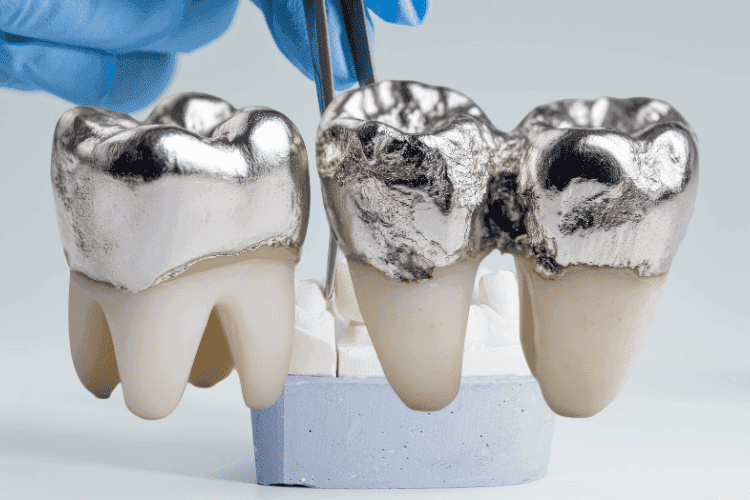 Photo by xoxostd on Canva
Before getting a dental crown, there are a few important factors to consider:
- The Location of the Crown: Is it for a back tooth where strength is more important, or a front tooth where natural appearance is the priority?
- Durability Needs: How long do you need the crown to last? Some materials are more durable than others. For example, gold and zirconia are best for long-term use.
- Your Budget: Some crowns can be more expensive due to material costs, but they may offer better visual appeal or longevity.
- Bite Habits: If you grind your teeth, consider more durable options such as gold, which are resistant to chipping.
- Biocompatibility & Allergies: If you have a metal allergy, consider zirconia or all-ceramic crowns. Even crowns with metal underneath will affect you, so choose non-metal options.
- Tooth Structure Conservation: Every material requires different levels of shaving of the natural tooth. Metal requires the least, while porcelain and PFM require the most.
Dental Crowns vs Dental Implants
While dental crowns and dental implants restore damaged teeth, they are quite different. A dental crown covers a damaged tooth, while a dental implant places an artificial root into the jawbone.
Crowns sit on top of natural teeth that are still present, while implants sit on top of a screw that an oral surgeon places into your jawbone where your natural tooth used to be.
A dental crown is better if your natural tooth and root are still healthy. However, if a tooth root is gone, a dental implant is better because it keeps your jawbone structure strong.
Paramount Dental: Dental Crowns to Restore Your Smile
At Paramount Dental, we offer a variety of dental crowns as part of our restoration dentistry services in Placerville, Roseville, Sacramento, and Yuba City to help restore your broken or discolored tooth. We can help guide you through the options that best fit your needs. Our team of experts is here to provide personalized care and make sure you get the best outcomes.
We offer sedation dentistry to help you remain comfortable, especially for wisdom tooth removal and All-On-4 implant placement. Our experts are also available for regular dental visits, and we accept insurance coverage. The next time you need a new dentist, put Paramount Dental at the top of your list.
Frequently Asked Questions
What is the Best type of Crown for Teeth?
The best crown depends on factors such as the location of the tooth, your aesthetic preferences, bite habits, allergies, and your budget. For example, all-ceramic or porcelain crowns are ideal for front teeth, while metal or zirconia crowns are better for back teeth due to their strength.
What is the Cheapest Type of Tooth Crown?
All-resin crowns are the most affordable option, though they do not last as long as other types.
Is Getting a Crown Painful?
Getting a crown is not painful. Your dentist will numb the area to make sure you’re comfortable during the procedure.
How Long Do Crowns Last?
According to an article by Healthline, a dental crown can last between 10 and 15 years. However, it depends on the material you choose and on practicing good oral hygiene. All-resin crowns last the least, three to five years, while Zirconia and Gold can last 20 or more years.
Which Type of Crown is Best for Back Teeth?
Metal or zirconia crowns are often the best options for back teeth because they are strong and durable.
Can I Eat Normally With a Crown?
Once your dentist places the crown, you should be able to eat normally. However, avoid hard foods that could damage the crown for the first few days after placement.
Final Thoughts
Dental crowns are a reliable solution for restoring the functionality and appearance of damaged or cracked teeth. They come in multiple options depending on needs, such as natural-looking appearance and durability. Always discuss your crown type options with your dentist to determine the best one for you.
Reference List
- Lindberg, Sara. How Long Does a Crown Last? Average Lifespan of a Dental Crown. (2021, 19/02/21) Healthline, Healthline Media.