

If you want to replace missing teeth, you’ve probably wondered, “How do dental implants work?” Dental implants are a transformative solution for people who are dealing with missing teeth. They offer a permanent, natural-looking solution that mimics the appearance and function of natural teeth.
At Paramount Dental, we provide advanced dental solutions to restore your smile and improve your oral health through effective, reliable care. In this guide, we’ll discuss the dental implant procedure, from the initial consultation to the final restoration, to help you understand the benefits of dental implants.
Key Takeaways:
- Dental implants are a long-lasting, effective solution for missing teeth.
- The dental implant procedure involves several phases, including consultation, surgery, and restoration.
- Dentists perform bone grafts when there’s insufficient jawbone.
- Post-surgery healing is vital to ensure successful osseointegration.
- Dental implants offer numerous benefits, from improving oral health to boosting confidence.
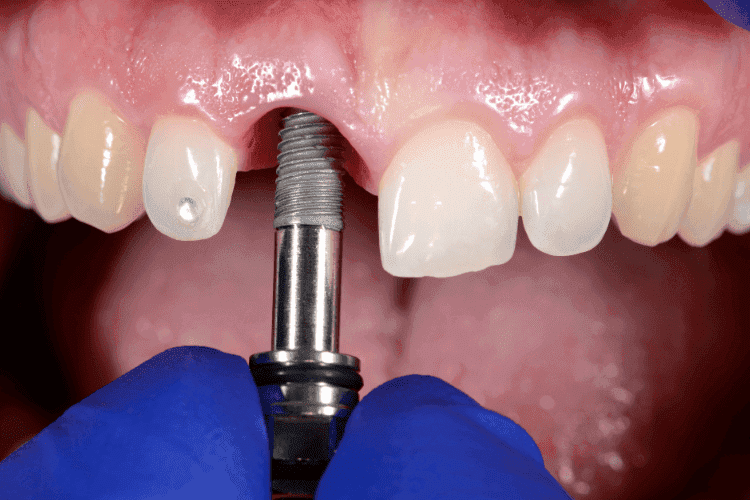
Dental implants are titanium posts that serve as artificial tooth roots. Dentists implant them into the jawbone to hold artificial teeth, such as crowns, bridges, or dentures, in place. They’re artificial replicas of the tooth root, permanently implanted to provide a stable replacement for missing teeth.
Dental implantation starts with the surgical placement of the implant root into the jawbone. This is followed by the attachment of a connector (abutment) and a crown (artificial tooth) custom-made for the individual. The implant post eventually integrates with the bone, a process called osseointegration. This enables it to act precisely like a natural tooth root.
Dental implants are an ideal solution if you want to replace lost teeth and restore your smile without the worry of slipping or shifting, which can happen with dentures. But you’ll need professional dental services to complete this procedure successfully.
At Paramount Dental, our expert sedation dentistry services and compassionate support make the process comfortable and deliver results you can trust. We offer affordable dental implants in Placerville, Yuba City, Roseville, and Sacramento.
Our Step-by-Step Dental Implant Procedure
The dental implant process involves several important steps, carefully designed to ensure the final result looks and feels natural.
1. Initial Consultation and Planning
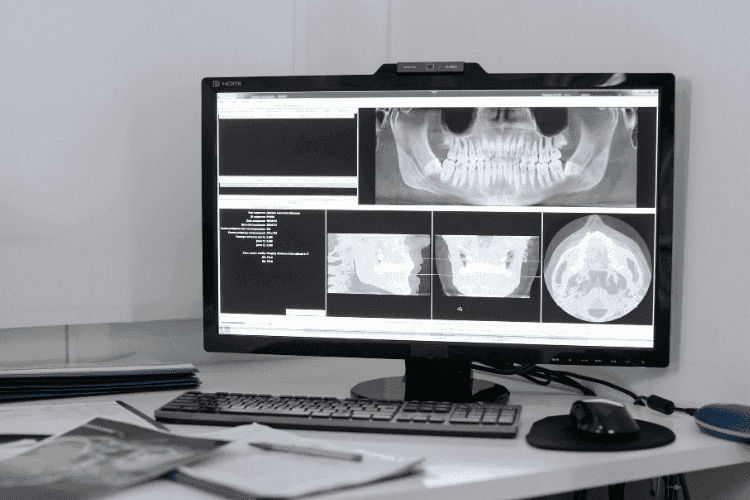
Your dental implants journey starts with a free consultation at the offices of Paramount Dental. During the visit, our experienced team, led by Dr. Barinder Cheema, will assess your dental health and check your medical history. They’ll also use X-rays or a CT scan to check if you have healthy jawbone tissue necessary to support the dental implant. If you’ve lost your teeth or have gum disease, our dentist will perform a bone graft to prepare the jawbone for the dental implant procedure.
2. Dental Implant Surgery
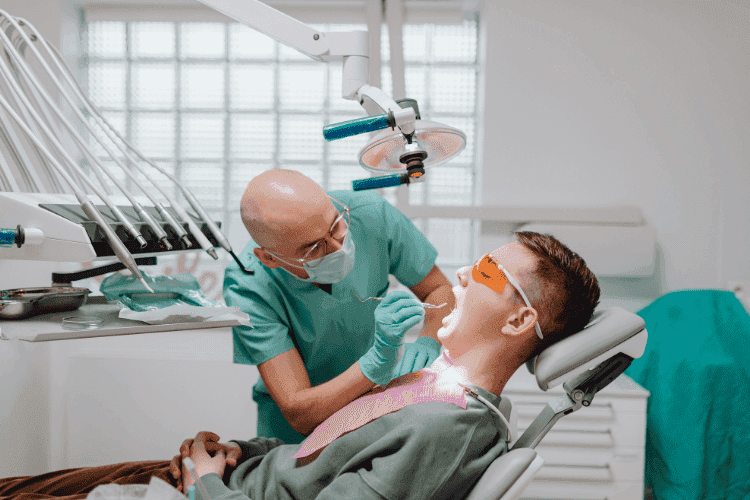
Once you’re deemed a good candidate, the next step is dental implant surgery. This procedure is typically performed under local anesthesia or sedation, depending on your comfort level. During implant surgery, the surgeon inserts the implant post into the jawbone at the site of the missing tooth.
Implant placement is generally a minor surgery, typically taking about one hour per tooth. However, if you require two or more implants or extensive work, it may take longer. The surgeon will make a small incision in the gum to expose the jawbone, then insert the implant post to serve as a stable foundation for your artificial tooth.
3. Healing Phase
After the implant surgery, your body enters the healing phase, which typically lasts 3 to 6 months. During this time, the implant post undergoes osseointegration, a process where the surrounding bone fuses with the titanium implant. This fusion is crucial to the implant’s success, as it allows the implant to function like a natural tooth root.
While you’re healing, our dentist may provide a temporary crown to help you maintain a natural appearance and function. During this phase, the dentist will monitor your progress to ensure the implant is healing properly. The initial healing period typically takes several months (3 to 6 months), but this can vary based on the patients’ overall health and the quality of their jawbone.
The Role of Bone Grafts in Implant Placement
Patients may also lack enough healthy bone in their jaw to support an implant. Several factors can cause this, including the negative impacts of gum disease, allergic reactions, missing teeth, and other health conditions. When this is the case, patients may need a bone graft to increase the density of their jawbone.
A bone graft is a procedure in which bone, either from the human body or artificial, is transplanted into the jawbone to provide a firm base for the dental implant post. Once the procedure is complete and the bone has healed, doctors can then place the dental implant.
The Final Restoration: Fitting the Artificial Tooth
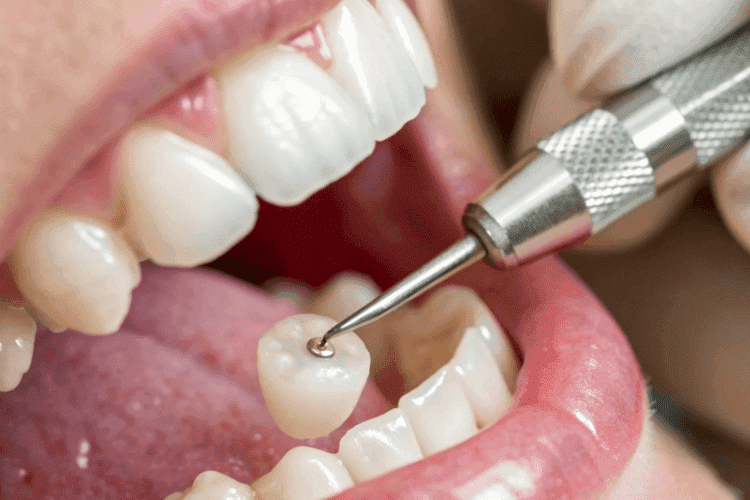
Once the implant has successfully integrated with the surrounding bone, the next step is to attach the implant abutment and artificial tooth. The implant abutment is a small connector that’s screwed into the implant post to provide support for your new tooth.
You can personalize the artificial tooth or crown to match your natural teeth in color, shape, and size. This ensures that the final crown fits with your smile. Once the final restoration is done, you can enjoy a fully restored tooth that functions and looks just like your natural teeth.

Benefits of Dental Implants
Dental implants offer several advantages over conventional tooth-replacement options, such as dental bridges or dentures. According to the American Academy of Implant Dentistry, the Mayo Clinic, and Pjetursson et al. (2004), the success rate is over 95%, outperforming dental bridges, which last only 10 to 15 years and can weaken adjacent teeth. Some of the most significant benefits of dental implants include:
- Long-Term Durability: With proper care, dental implants can last a lifetime, making them one of the most durable solutions for missing teeth.
- Improved Oral Health: Unlike dentures, which cause bone loss after a few months, dental implants maintain the structure of the jawbone, stimulating it in the same way natural teeth do. This helps preserve oral health and prevents further deterioration of the gum line and surrounding tissues.
- Comfort and Stability: Because dental implants are attached to the jawbone, they provide greater comfort and stability than dentures, which can shift or slip out of place. You won’t have to worry about your implants working like traditional alternatives.
- Aesthetics: Dental implants look and feel like natural teeth, restoring your smile and allowing you to speak and eat confidently without worrying about your new tooth.
Potential Risks and Considerations of Dental Implants
While dental implants offer many benefits, like any surgical procedure, they come with a small risk of complications. Some of the potential dangers include implant failure, infection, or nerve damage. However, these issues are rare and typically arise from poor planning or insufficient aftercare.
Choose a qualified oral and maxillofacial surgeon or dental specialist who has experience in dental implant surgery to minimize these risks. Patients with certain medical conditions, such as gum disease or diabetes, may also require special care before the dental implant procedure.
Dental Implants’ Aftercare and Maintenance
After receiving dental implants, maintain good oral hygiene to ensure long-term success. Brushing and flossing regularly, along with professional cleanings, will help keep your implants and natural teeth healthy. Your dentist will provide specific aftercare instructions for dental implants at follow-up appointments to ensure proper healing.
Frequently Asked Questions
How Long are Dental Implants Meant to Last?
With proper care, most dental implants can last a lifetime. You may need to replace the new artificial tooth (crown) placed on top of the implant every twenty to twenty-five years. Regular visits to your restorative dentist for checkups and maintenance will ensure the longevity of your dental implants.
How Painful Is Getting a Dental Implant?
The dental implant placement process is generally not painful. During this oral and maxillofacial surgery, the dentist or surgeon will inject local anesthetics around the dental implant site. You can experience some discomfort or swelling after the procedure, but most patients report that it’s manageable with over-the-counter pain medication. In some cases, sedation options are available for nervous patients or those undergoing multiple implants.
Can Dental Implants Get Cavities?
While dental implants can’t get cavities like natural teeth, you should still maintain good dental health. This is because even the dental crown can develop wear or damage, and the gums forming the supporting tissue for the implants can become infected if you don’t maintain proper oral hygiene. Brushing and flossing regularly, along with routine cleanings from your general dentist, will help support the health of your implants.
Are Implants Better than Dentures?
Yes, dental implants are way better than traditional dentures. They’re fixed in the jawbone, making them less likely to slip and cause irritation, which is the case with dentures. They also preserve the jawbone by preventing bone loss, whereas wearing dentures can lead to bone loss over time. Additionally, dental implants look and function more like natural teeth, offering a more permanent solution for one missing tooth or several teeth.
Can You Eat Normally with Dental Implants?
Yes, after the procedure and healing, you can resume your regular eating routine with dental implants. Note that they work just like your natural teeth and enable you to eat any food. However, you should strictly follow your dentist’s guidelines regarding your healing, especially after surgery. If you’re replacing multiple teeth or damaged teeth, you’ll be amazed at the stability of dental implants and how they work like natural teeth.
Conclusion
Dental implants are a safe, reliable solution to missing teeth. They enable you to return to normal function, and they feel just like your natural teeth. Dental implants are also an effective way to protect your oral health because they’re durable and can last an entire lifetime.
Are you ready to discuss your options and gain a greater understanding of the dental implant procedure? You can schedule a free consultation with our dental implant experts at Paramount Dental. We appreciate the opportunity to help restore your smile and dental health.
References
- American Academy of Implant Dentistry (AAID). (n.d.). Dental implants.
- Mayo Clinic. (n.d.). Dental implants.
- Pjetursson, B. E., Tan, W. C., Lang, N. P., & Brägger, U. (2004). A systematic review of the survival and complication rates of implant-supported fixed dental prostheses for edentulous patients. Clinical Oral Implants Research, 15(6), 681-694.