
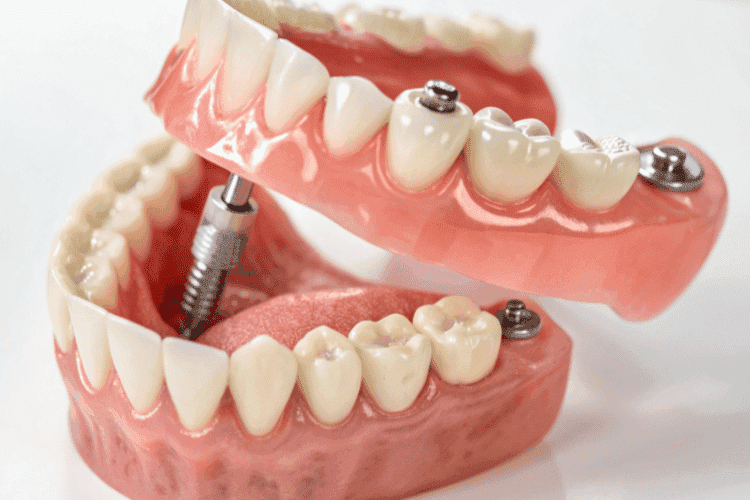
If you want long‑lasting, natural‑feeling tooth replacement, you need to learn about full-mouth dental implantation. This transformative surgical procedure is a great way to replace missing teeth.
Dental implants offer more benefits than cosmetic procedures. They restore your smile and appearance, and the full function of your teeth. Given these significant benefits, it’s only natural to be concerned about the cost of dental implants.
This guide outlines the average price of full-mouth implants and explains the factors that affect pricing. You’ll be able to understand what to expect from dental practices in 2026.
What Are Full Mouth Dental Implants?
Full-mouth dental implants replace a whole set of failing, damaged, missing, or deteriorated teeth. It’s a form of restorative dentistry that offers more permanent results compared to traditional dentures.
Unlike single dental implants, which replace a single tooth, full-mouth dental implants restore the upper and lower arches with artificial teeth anchored directly into your jawbone. Also, they are different from removable dentures because dental implants give you permanent teeth that look, feel, and function like your natural teeth.
Full Mouth Implants Vs. Dentures
Many people rely on dentures to replace missing arches. While they’re more affordable upfront, dentures don’t stop the gradual bone loss that happens after tooth loss.
For this reason, dentists now recommend full mouth dental implants, which support jawbone health. People love our all-on-4 dental implants as they can replace a full arch of upper or lower teeth using only four posts to support 10 to 14 teeth.
Also, more people are rejecting dentures because they can irritate gums and shift during eating or talking. In contrast, full mouth implants:
- Provide fixed‑in, stable prosthetics
- Preserve bone health and facial structure for long-term benefits
- Offer a stronger bite force
- Promote better chewing and speech
- Have a long lifespan with proper care
- Protect neighboring teeth from shifting
These advantages explain why dental implant surgery can be more expensive than dentures and other restorative options. Many patients often see full implants as a long‑term investment in their oral health and quality of life.
Average Cost of Full-Mouth Dental Implants in 2026
It’s important to note that dental implant procedures and total pricing may vary based on location, dental practice, needs, and materials. Here are the averages that can help you set realistic expectations. Most patients will pay these general ranges in 2026:
| Implant Type | Number | Average Starting Price Per Arch |
|---|---|---|
| All-on-4 dental implants | Uses four implants | $22,000 – $34,000 |
| Full traditional implants | Uses six to eight implants | $28,000 – $45,000 |
All‑on‑4 dental implant costs tend to be lower than full traditional implants because they use fewer posts. This design often also reduces the need for extensive bone graft procedures. Traditional full-arch implants require more individual posts (six to eight per arch), which increases the cost of dental implants.
Note that these prices are just averages. The actual cost may differ depending on several factors, such as bone grafting requirements, type of dental crown, additional procedures, and pre- and post-operative care.
Dental Implant Cost Components
When you ask, “How much do full mouth dental implants cost?”, you often receive a single number, which can be confusing because it covers and excludes some services. Your full-mouth dental implant fees are the sum of four components:
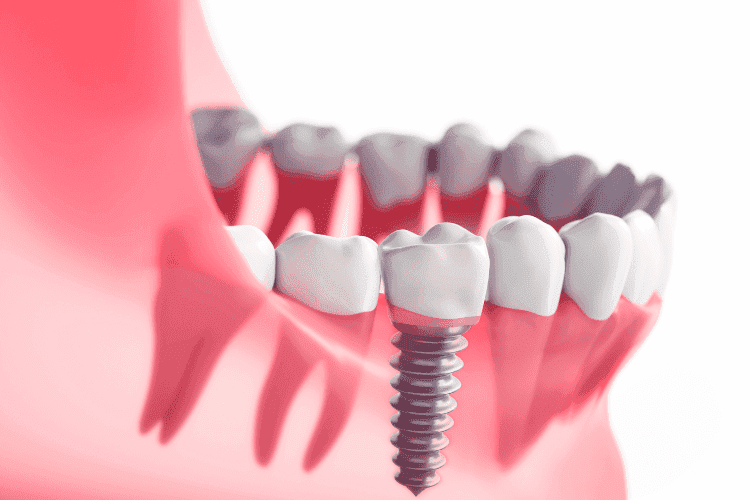
1. The Implant Post (Titanium/Zirconia)
The implant post is the titanium or zirconia screw that an oral surgeon places into your jawbone during the procedure. It functions like a new tooth root, providing stability for the artificial tooth.
- Role: Provides foundation for prosthetic teeth
- Dental Implant Cost Contribution: Varies by material and number used
Many oral surgeons prefer using titanium posts because they are strong and have a high success rate. Titanium posts are also slightly flexible under pressure like natural roots, and cost less.
Zirconia posts are a great alternative for people with metal allergies. They are naturally white, which is an advantage for patients with thin gums. The cost of zirconia posts is higher because making them is a more complex process. Note also that zirconia is more brittle than titanium, so it’s better for the front teeth than the back.
2. The Abutment (Connector)
After the implant post fuses with your bone, the oral surgeon attaches an abutment. The abutment is the bridge between the implant in your bone and the teeth you see.
This small connector can also affect your gum health and the success of the implants. If an abutment does not fit well, bacteria gather at the gum line. This can lead to inflammation and implant failure.
- What an Abutment Does: Joins the implant post to the prosthetic tooth or denture
- Pricing Impact: Adds to the final price depending on material and precision
There are two main types of abutments, prefabricated and custom. Prefabricated or stock abutments come in standard sizes and are easily available. They are cheaper and faster to install, but don’t always match the shape of your gum line.
Custom abutments match your exact gum structure. They offer better visuals because they fit well. However, custom abutments cost more and take longer to make.
Abutment material often matches the implant post material, so you’ll often get zirconia or titanium.
3. The Final Prosthesis
This is when the surgeon places the replacement teeth. There are several types:
- Fixed Bridges: These are permanent because an oral surgeon attaches them to implant posts. In full mouth implants, it’s a one-piece bridge that covers the whole arch. Fixed bridges feel the most like natural teeth.
- Hybrid Dentures: These bridge the gap between a denture and a bridge. Oral surgeons often use them with All‑on‑4 or All‑on‑6 implants. The surgeon screws them in, including a pink acrylic base to replace lost gum tissue.
- Custom Crowns: In some cases, surgeons place eight rather than four to six implants, then attach individual or small groups of crowns. It’s a natural-feeling prosthesis, but also the most expensive of the three.
Besides type, the materials also matter. For example:
- Acrylic: These are usually the temporary teeth you wear during healing because, as a permanent choice, they’re prone to staining and wearing down. Also, they’re the cheapest.
- Porcelain: These look the most natural, but can be prone to small chips over time if you have a very strong bite.
- Zirconia: It’s strong and 100% stain-resistant. Because of this, it’s the most expensive.
4. Surgical Placement
Placing implants requires surgical expertise and precision. Clinical labor and surgical fees are a large part of the overall cost. Note that the practice may use advanced guided technology for accuracy and better results.
Additional Cost Factors
The following procedures and services can also affect how much you pay for that natural smile:
Imaging & Diagnostics
Before any tooth replacement, the surgeon must take CT scans or X‑rays to help them see the exact thickness of your jawbone, plus the location of sinuses and nerves. These steps are necessary for a successful implant surgery. Some dental offices group these diagnostics into dental exam packages.
Bone Grafting & Tooth Extractions
If you’ve been missing teeth for years, your jawbone shrinks, which can be a problem. In such cases, the surgeon must perform a bone graft or a sinus lift. Similarly, existing failing teeth might require extraction. Both procedures add to the cost and can affect how soon you get the implants, since you must recover first.
Sedation/Anesthesia Options
Comfort matters in any form of oral surgery, including getting dental implants. Therefore, you need sedation. Most dental practices offer:
- Oral Sedation (Pills): You’ll be conscious but dreamy.
- IV Sedation (Twilight): You won’t remember the procedure, but you’re not as gone as with general anesthesia.
- General Anesthesia: Used for the most complex cases or for patients with dental phobia.
Sedation dentistry adds to the cost of dental implants but makes the procedure more comfortable.
Geographic & Provider Expertise
Implant prices vary across regions and between practices. For example, urban areas like New York and Los Angeles have higher prices due to the high cost of living. Also, highly experienced clinicians and practices with leading technology may charge higher fees.
Costs Not Included
There are a few more costs you need to consider, which are usually not part of the procedure. They include:
Consultation & Treatment Planning
Even before surgery, there are costs for developing your personalized plan. They can include imaging, exams, and a review of options such as implant-supported dentures versus fixed prosthetics. Consultation fees may also apply during the first visit. However, some practices may offer free consultation or charge an affordable cost to encourage you to move forward with the plan.
Follow‑Up Appointments & Maintenance
After implant placement, follow‑up office visits help the surgeon monitor healing and the success of the implants. These appointments, plus long‑term maintenance for a beautiful smile, contribute to the total cost over time.
Insurance & Financing Options
Many dental insurance plans now offer partial coverage for implants, especially if they replace functional teeth. Insurance benefits usually mean covering 40% to 50% of the cost of the implant. Others cover according to procedure. For example, a plan may cover two procedures or two implants per lifetime. Some people also go for payment plans and third-party financing.
Which Full Mouth Implant Is Right for You?
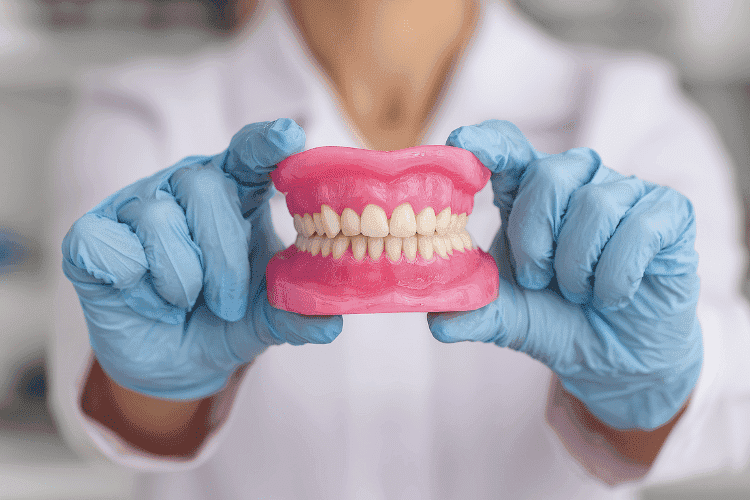
Choosing the right treatment often depends on your needs, goals, case, and budget. All‑on‑4 dental implants cost less per arch than traditional individual implant solutions because:
- They need fewer posts
- Often eliminates the need for grafting
- Shorter treatment time
- Faster recovery
- Excellent stability
Traditional full-implant solutions do provide good support and load distribution, but they cost more. The final choice should rely heavily on what an experienced dental health expert advises, and your jaw bone health.
Full Mouth Dental Implants at Paramount Dental
We specialize in full-mouth dental implants for missing teeth using the advanced All‑on‑4 solution to restore your smile affordably and beautifully. Many patients leave our office the same day with a temporary full set that matches adjacent teeth. With our restoration services and sedation options, you will get immediate confidence and function comfortably.
Take advantage of our 2026 New Year special for all-on-4 dental implants at just $17,999. It covers the initial exams, treatment plan, x-rays, and the full treatment. And with affordable options for the final prosthesis, you get excellent value for your money. Best of all, we accept dental insurance and in-house payment options.
FAQs
How Much Do Full-Mouth Dental Implants Cost?
The starting price for full mouth dental implants is $22,000 per arch, depending on various factors such as the choice of material and the number of implants needed.
Are All Costs Included in a Single Price?
Not always. Some quotes may exclude imaging, sedation, bone grafts, and follow-up care, so always ask about what’s not covered.
Does Insurance Cover Implants?
Many dental insurance plans offer partial coverage for certain parts of the procedure, such as removing problem teeth and placing crowns. Full implant coverage is less common.
What Affects Full Mouth Implant Cost Most?
The biggest cost factors include the number and type of implants, the need for additional procedures such as bone grafting, sedation options, prosthetic materials, and your surgeon’s costs.
How Long Do Implants Last?
Dental implants can last 20 years or more, with proper care and regular maintenance.
Final Thoughts
Understanding how much full mouth dental implants cost can help you determine if they’re the right fit in restoring your smile. These cost breakdowns show everything that goes into pricing dental implants, and the value they offer as a long-term solution for missing or problem teeth. However, note that there is no one price for implants, which is why you should choose an experienced professional offering reasonable prices for the best smile.