
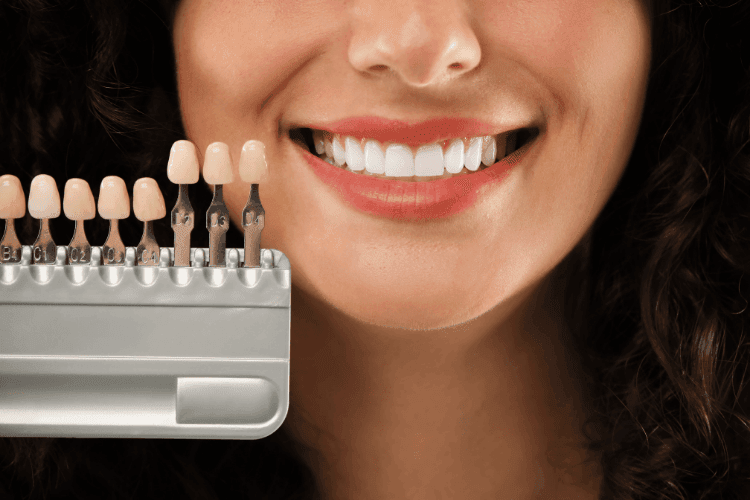
Your smile tells your story before you even say a word, and we understand how much confidence a healthy smile can give you. Cosmetic dentistry offers solutions for damaged enamel, tooth discoloration, or cracks from daily wear and tear. Some of the most popular choices are dental veneers and crowns – but which is right for you?
In this article, we explain the differences and benefits of crowns and veneers to help you make the best decision for your smile and confidence.
Key Takeaways
- Dental crowns cover your entire tooth, restoring its strength, shape, and function.
- Porcelain veneers cover the front tooth surface.
- Patients typically choose veneers for cosmetic purposes, especially on front teeth.
- Dentists use crowns to restore severely damaged or decayed teeth; they recommend veneers to fix cosmetic concerns like discoloration or gaps.
Have a look at our smile gallery to see before and after photos of our patients’ smile makeovers. Dr. Barinder Cheema heads up cosmetic dentistry at Paramount Dental and would love to help you regain confidence in your smile.
Understanding Dental Crowns
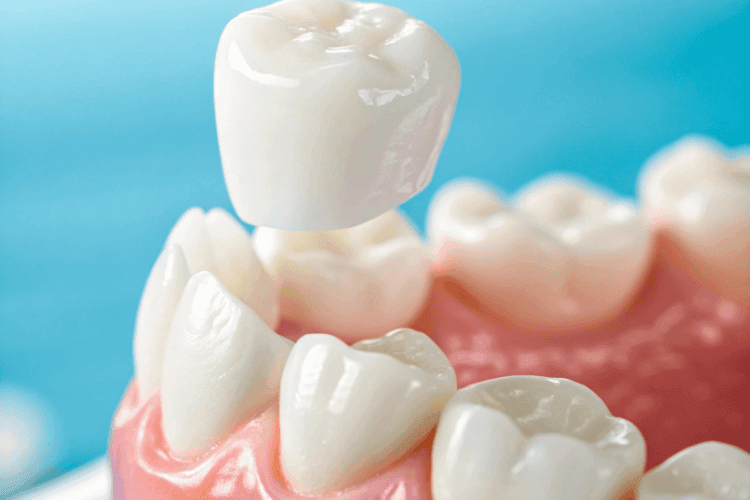
Your dentist would use a dental crown when you need to cover the visible part of your tooth because of damage or decay. A crown acts like a cap; it protects your whole tooth and strengthens it.
Dentists place dental crowns to restore dental concerns such as teeth compromised by decay, trauma, or procedures like root canals. Crowns restore damaged teeth that cannot be repaired with less invasive treatments like dental fillings.
Before placing it, the dentist prepares your tooth for the crown placement by removing a thin layer of enamel. Your dentist must reduce your natural tooth structure to make room for the crown so it blends in.
Dentists make crowns from:
- Porcelain: For a natural look
- Porcelain fused to metal: For a natural and durable solution
- Metal crowns and metal alloys: The strongest option for back teeth; highly durable and often more affordable.
Your choice of crown material, such as a porcelain crown, metal crown, or metal alloy, affects both the durability and aesthetics of your final restoration.
Why Consider a Crown?
- Dentists often place a crown after a root canal treatment to protect and restore the damaged tooth, which becomes more fragile after the procedure.
- Dentists use a crown to support a large filling when there isn’t enough natural tooth left to hold it.
- To repair a broken tooth or cracked teeth, especially those caused by grinding (bruxism)
- Dentists restore a worn-down, weakened tooth with a permanent crown when it can’t support chewing or is at risk of further damage.
If you’re having a dental crown procedure, you can expect to visit your dentist twice. During your first appointment, your dentist will numb the surrounding gum area and remove any decay or damaged material.
Then, he will remove some of your dental enamel. He will take an impression of your prepared tooth and send it to the dental lab. Dentists place a temporary crown to protect your tooth while they prepare your permanent one. At the second appointment, they bond the permanent crown in place and make adjustments until it fits securely.
With proper care, you can keep your dental crown for 10 to 15 years, or even longer.
Dental Crowns and Root Canal Treatment
After a root canal, the tooth becomes more brittle. Dentists will place a temporary crown to strengthen and protect the tooth if they need multiple sessions to remove the infected tooth pulp. Once the process is completed, your dental professional will fit a permanent crown, preserving tooth function and preventing further damage or infection.
Without a crown, the tooth faces a higher risk of cracking or breaking, especially if it’s a molar used for chewing. A well-fitted crown provides a long-lasting solution that keeps your smile healthy and pain-free.
What Are Porcelain Veneers?
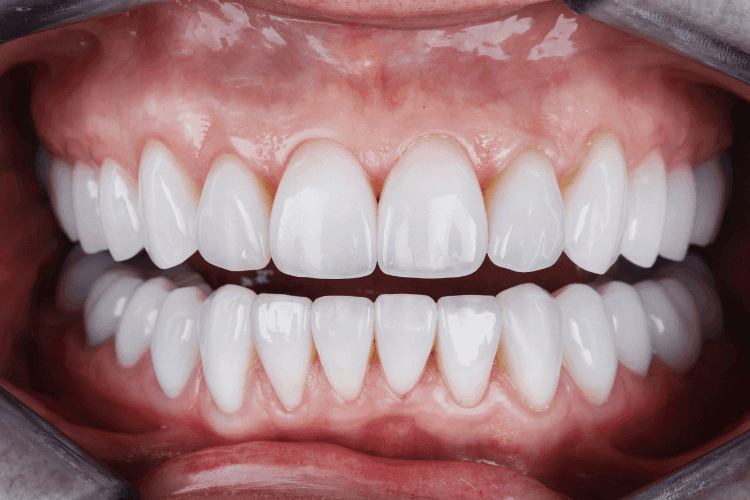
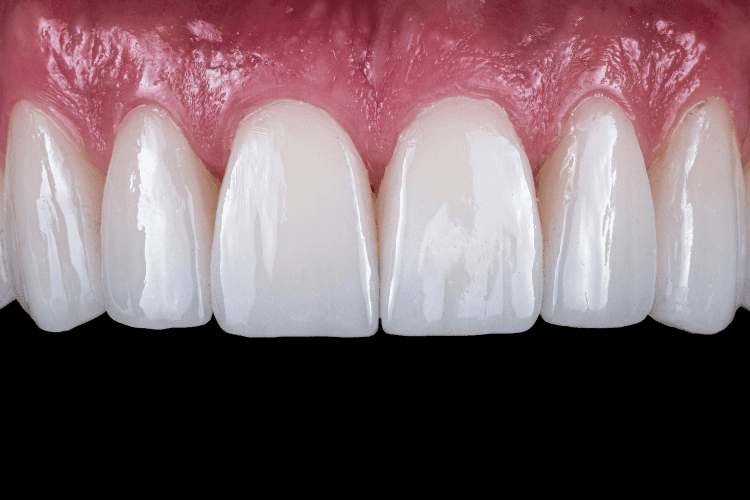
Dental professionals bond thin shells of porcelain or composite veneers to the front surface of your teeth. Unlike crowns, veneers only cover the visible portion or front surface. Each veneer is only about half a millimeter thick. Your dentist only needs to remove a small amount of enamel, which makes it a more conservative way to create an aesthetically pleasing, natural smile.
Composite veneers do not last as long as porcelain, but are also a more affordable permanent veneer solution.
Dental professionals may use veneers to treat:
- Discoloration that doesn’t respond to tooth whitening
- Chipped or cracked teeth
- Teeth that are misaligned
- Uneven or irregularly shaped teeth
- Small gaps between teeth
Dentists usually complete dental veneer procedures in two appointments. During your first visit, there will be minimal enamel removal. Your cosmetic dentist will take impressions of your prepared teeth. You will wear temporary veneers while a dental lab creates your custom veneers.
After your dentist has bonded your veneers, they can last for 10 to 15 years if you practice good oral hygiene.
Why Consider Dental Veneers
Porcelain veneers are the gold standard in terms of durability and appearance, but they do come at a higher cost. Composite resin veneers are more budget-friendly but typically don’t last as long or resist stains as effectively. Because dental enamel has to be removed for cosmetic veneers, porcelain is a better long-term material. Redoing composite veneers means that more dental enamel has to be removed.
Veneers can be a fantastic option for:
- Patients who have healthy teeth but want to correct cosmetic flaws
- People who want to straighten their smile without wearing orthodontic braces
- Combining with teeth whitening or bonding for a full smile makeover
- Correcting minor issues like uneven teeth or chipped teeth without invasive procedures
Dentists often use veneers to improve the appearance of multiple teeth, creating a more uniform and attractive smile.
With veneers, you can achieve a whiter, straighter smile that looks completely natural. Porcelain reflects light like natural teeth, which is why it is so popular in cosmetic makeovers.
Veneers and Crowns: Important Differences
Both crowns and veneers can address different needs depending on the condition of your teeth. Veneers and crowns are made in a dental lab, but the procedures are done in the dental office.
| Feature | Crowns | Veneers |
| Coverage | Covers the entire tooth’s surface | Covers only the front surface of the tooth |
| Purpose | Restores the tooth’s strength, function, and shape | Improves appearance |
| Location | Can be used on the front or back teeth | Best for visible or front teeth |
| Tooth reduction | Requires removal of more natural tooth structure | Preserves more tooth structure (minimal removal) |
| Strength | More durable | Less durable |
| Ideal For | Severely damaged or decayed teeth (tooth decay may require a crown) | Healthy teeth with cosmetic flaws |
A crown restores your tooth’s strength and function by covering the entire surface when tooth decay or damage compromises its integrity. Dental professionals use veneers primarily for cosmetic purposes, helping patients improve their appearance while preserving most of their natural teeth.
Regular dental check-ups and good oral hygiene help ensure your restorations last and your oral health remains optimal.
Crowns and Veneers: What’s Best for You?
If you’re wondering about veneers vs crowns, consider the condition of your existing teeth. Are they structurally compromised? If so, a crown might be necessary. If it’s healthy but aesthetically imperfect, a veneer could be the better option.
Other factors to think about include:
- Durability: Crowns tend to be more durable under heavy biting force.
- Cost: The cost of dental crowns depends on the material you choose. Porcelain and ceramic crowns are typically more expensive than all-metal crowns, while veneers can be more affordable depending on the materials.
- Preparation: Veneers preserve more of your tooth enamel.
Contact us for personalized advice and an accurate estimate of what crowns cost. Our dental clinic has locations in Roseville, Placerville, and Yuba City for your convenience.
The Role of Cosmetic Dentistry
Our goal is to provide trusted care in a welcoming, modern setting, whether you need dental crowns, cosmetic veneers, or a complete smile makeover. Dental implants are completed with crowns to replace missing teeth, helping to restore both function and aesthetics.
We also specialize in sedation dentistry for patients who feel anxious or have had uncomfortable dental experiences in the past. We offer nitrous oxide (laughing gas), conscious oral sedation, and IV sedation to keep you comfortable during your dental treatment.

Veneers vs Crowns: Aesthetic Considerations
Dentists custom-make crowns and veneers to blend seamlessly with your existing teeth. They carefully match the tooth color, shape, and size to ensure a beautiful result.
An experienced cosmetic dentist understands how subtle changes can make a major impact on your overall appearance. Dr. Cheema will work with you to achieve a smile that looks and feels natural.
Veneers vs Crowns Cost
The costs of veneers and crowns vary depending on:
- The materials we use e.g., porcelain crowns and veneers are more expensive.
- Complexity of the case
- Whether you need additional procedures like root canals or tooth extractions as part of your dental treatment
- The number of teeth we are treating
We understand that cost matters, which is why we:
- Accept most dental insurance plans
- Present detailed treatment estimates
- Offer flexible payment options
- Help you understand what’s covered under your dental insurance
Ready to Talk About Your Smile?
Choosing between cosmetic veneers and crowns doesn’t have to be overwhelming. With our expert guidance and a caring team, you can achieve results that will make you smile. We’re here to help you make the best decision for your health, smile, and confidence.
Contact our dental practice in Roseville for a convenient appointment: (916) 898-0003.
References
- American Dental Association. (2020). Crowns and Veneers.
- Mayo Clinic. (2021). Dental Veneers.
- Cleveland Clinic. (2022). Dental Crowns.
- WebMD. (2023). What Are Dental Veneers?
- Healthline. (2023). Dental Crowns vs. Veneers: Which Is Right for You?