
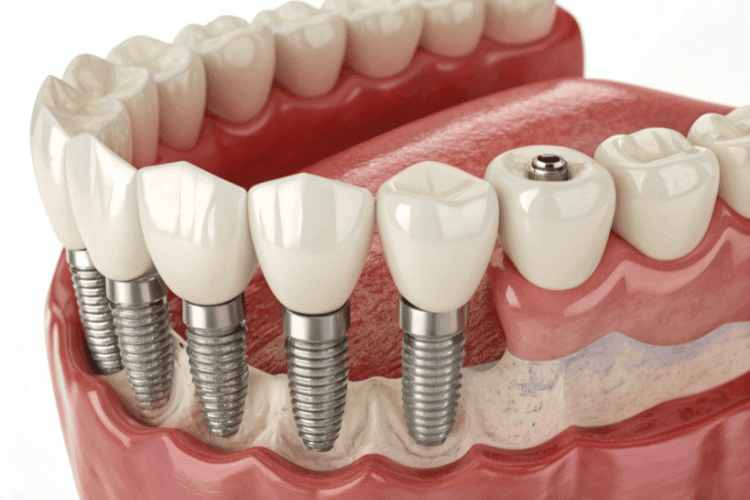
Dental implants are a great solution for those who have lost natural teeth. These implants provide a long-lasting and natural-looking replacement.
Full mouth dental implants replace an entire arch of the upper or lower jaw. It sounds intense, which is why some people may be curious about how much time it would take to heal from this procedure.
Healing after full-mouth dental implants can take three to six months. However, it may take longer depending on factors such as bone density and the need for additional dental implant procedures.
In this article, we’ll explore the full mouth dental implants healing stages, outlining what you can expect from the recovery and tips for taking care of yourself during this time.
Key Summary Points of the Article
- Full mouth dental implants are a long-term solution for missing teeth, but healing time varies depending on individual factors.
- The initial recovery period after tooth extraction can take a few days to several weeks, with some discomfort.
- Osseointegration, the process where the bone fuses with the implant, takes 3-6 months.
- Final restorations happen after the osseointegration period, completing the healing journey.
- Proper care and following your dentist’s instructions will help the healing process and implant success.
Full Dental Implant Surgery Recovery Time
Surgeons use full dental implants to replace missing teeth caused by periodontal disease and other conditions. They are a stable, natural-looking alternative to traditional dentures. Full dental implants are more secure and long-lasting, unlike dentures, which can slip or need frequent adjustments.
The tooth replacement procedure requires a minor surgery and local anesthesia to place artificial tooth roots (dental implants) into the jawbone, where they fuse with the bone over time. This creates a strong foundation for the surgeon to attach the replacement teeth.
This form of restoration dentistry may include load implants, which allow the placement of temporary teeth on the same day as the surgery. This option is good for patients who have struggled with gum disease.
Healing after getting a dental implant or full mouth implants usually occurs in the following stages for most patients:
- Initial recovery: The first 24-48 hours after dental implant placement come with pain and swelling.
- Soft tissue healing: Over the next few weeks, your gums will heal, and you’ll transition to soft foods as you get used to your new dental implants.
- Osseointegration: This dental implant recovery phase, lasting 3-6 months, is when the implants fuse with your jawbone, making them permanent.
- Final restoration: After the bone fuses with the implant, the surgeon places the final restoration, which usually takes two to four weeks of healing.
The First 24 Hours
What to Expect
It’s normal to experience some discomfort, pain, bleeding, and swelling around the surgical site immediately after getting dental implants. Your surgeon may place a few sutures in the gums to help with healing.
You should rest during the first 24 hours and avoid unnecessary physical activity. Also, avoid brushing the implant sites.
How to Manage Pain And Swelling
You will need pain medication after the initial surgery. Your dentist may provide a pain management plan, including prescribed medication and over-the-counter pain relievers.
As for swelling, it is normal after surgery, and you can manage it by applying an ice pack to your face near the surgical site for the first 24 hours. Do this for 15 to 20 minutes every hour. You can also keep your head elevated when resting to decrease blood flow to the face and thus reduce swelling.
Dietary Restrictions
During the initial healing, stick to a liquid or soft-food diet. It will minimize stress on the implants and reduce the risk of disturbing the surgical site. Foods such as smoothies, soups, scrambled eggs, and mashed potatoes are good choices. Avoid hot, chewy, spicy, or crunchy foods as they irritate the gums or implant site.
Three Days After Surgery
Medication
After the first 24 hours, your dentist may recommend continuing any prescribed medications, including antibiotics to prevent infection and painkillers to manage discomfort. Always follow the instructions carefully to avoid complications.
Regular Activities
By the third day, you should begin to feel more comfortable. However, you should still avoid strenuous activities or heavy lifting. Light activities are okay, but listen to your body because everyone’s healing progress is different. You can gently brush your natural teeth and other areas during this time. But avoid brushing the implants.
Sutures
If your surgeon used stitches during the surgical procedure, they might need to come out at this point or be left to dissolve on their own. Your oral surgeon should let you know when they need to check your sutures. If not, ask during your follow-up appointments.
Bone Graft Material
In some cases, your surgeon may place bone graft material to help osseointegration. Therefore, you may notice some gritty material in your mouth. Do not touch it because it is normal and should reduce during this time.
Soft Tissue Healing Stage: Weeks 1-4
A week after your implant placement surgery, your gum tissue will start regenerating around your new implant, as confirmed by a study by The Cochrane Database of Systematic Reviews. This healing period is important because the soft tissue creates a healthy seal around the implant.
How Your Gums Should Look
During the first month of recovery, your gums should look pink and healthy. However, don’t panic if you see some reddness and swelling, since everyone heals at a different pace. Also, you may experience minimal discomfort as your gums heal. With time, it should go down. During this stage, focus on soft foods to avoid irritating your gums.
Transitioning Back To Normal Foods
After a few weeks, most patients can slowly reintroduce more solid foods into their diet. However, avoid chewing directly on the implant sites until you heal.
Be careful of foods that might be too hard or crunchy, as they could damage the healing gums. If you have a dental exam during this period, ask your oral health expert what you can and cannot eat.
Brushing
You can begin gently brushing the implant sites with a soft-bristled toothbrush. Use minimal pressure and small, gentle strokes.
Osseointegration: 3-6 Months
How Bone Fuses With Your Dental Implant
The most important part of your recovery is the osseointegration phase. It usually takes about 3-6 months. Osseointegration time varies depending on factors such as your overall dental health and bone density.
During this time, the bone around the dental implant fuses with the implant, creating a stable foundation for the artificial tooth root. This process is important for the success of the implant surgery.
Osseointegration is painless, even after full-mouth implant surgery. However, some patients report mild sensations around the surgical area as it heals.
You should be able to eat normally during this phase.
Factors That Affect Osseointegration Timeline
- Bone density: The denser your existing bone, the quicker the implants will fuse. If you have low bone density, additional treatments such as bone grafting may be needed to support the healing process.
- Location of the implants: A study on the impact of jawbone regions and bone density on the accuracy of robot-assisted dental implantation confirms that implants in the lower jaw tend to heal faster than those in the upper jaw because of the denser bone structure.
- Smoking: According to a study on the risk factors that lead to failure of dental implants, smoking can affect the healing process and increase the risk of implant failure.
- Overall health: Your medical history and dedication to excellent oral hygiene practices can affect how quickly osseointegration happens, plus the long-term success of the implant.
Final Restoration
Once osseointegration completes, your dentist will place the abutment. It is the piece that connects the implant to the final restoration. At this point, your implants will be fully merged into your jawbone, and you will need time for the gums to heal around the abutment before the surgeon places your final crowns or bridges.
The surgeon will place the healing collar during this stage to shape the gum tissue around the implant, making it look more natural as it heals. This part of the process usually takes 2-4 weeks.
Paramount Dentistry: Experts for Full Mouth Dental Implants
As experts in restoration dentistry, we know that replacing multiple teeth at once for a new smile comes with a little anxiety. That’s why our compassionate team of experts provides exceptional care every step of the way.
With our sedation dentistry options and personalized treatment plans, we make sure that your dental implant process is comfortable. We offer a permanent solution while taking care of you from the initial consultation to abutment placement recovery.
Trust us to provide services such as a single implant, full-mouth restorations, dental veneers, minimally invasive procedures, and teeth whitening. Also, with our pediatric dentistry services, we are the perfect solution for the whole family.
Frequently Asked Questions
How Long Does It Take for Full Mouth Dental Implants to Heal?
Full mouth dental implants often require 3-6 months for osseointegration. However, the overall healing time varies depending on factors such as bone density and medical history.
Can I Eat Normally After My Dental Implant Surgery?
You should eat soft foods during the first few days to avoid stressing the surgical site. In the next weeks, you can slowly reintroduce more solid foods. However, everyone heals differently, so you can take more time before eating solid foods.
What Happens if My Dental Implants Fail?
Most dental implants are successful. According to a five-year retrospective study of dental implant survival, the overall survival rate is 92.5%. But in some cases, the implant can fail due to factors such as infection or low bone density. In such cases, your surgeon will create a different plan for you, such as a replacement implant or partially removable dentures. If you think your implants are failing, contact us so we can create a good plan for you.
Final Thoughts
Healing from full mouth dental implants is a multi-stage process that requires patience and proper care. Following your dentist’s instructions will help with the success of your implants. And if you have any concerns about your healing progress, always reach out to your oral surgeon.
Reference List
- Do, Thanh An, et al. Risk Factors Related to Late Failure of Dental Implant- A Systematic Review of Recent Studies. (2020, 02/06/20) International Journal of Environmental Research and Public Health, U.S. National Library of Medicine.
- Grusovin, Maria Gabriella, et al. Interventions for Replacing Missing Teeth: Maintaining and Recovering Soft Tissue Health around Dental Implants. (2010, 04/08/10) The Cochrane Database of Systematic Reviews, U.S. National Library of Medicine.
- Kuśnierek, Weronika, et al. Smoking as a Risk Factor for Dry Socket: A Systematic Review. (2022, 01/07/22) Dentistry Journal, U.S. National Library of Medicine.
- Miadili, Mirealimu, et al. The Impact of Jawbone Regions (Molar Area, Premolar Area, Anterior Area) and Bone Density on the Accuracy of Robot-Assisted Dental Implantation: A Preliminary Study. (2025, 25/02/25) Frontiers in Bioengineering and Biotechnology, U.S. National Library of Medicine.